Showing posts with label grass. Show all posts

Wednesday, November 8, 2023

University Station to University Station.


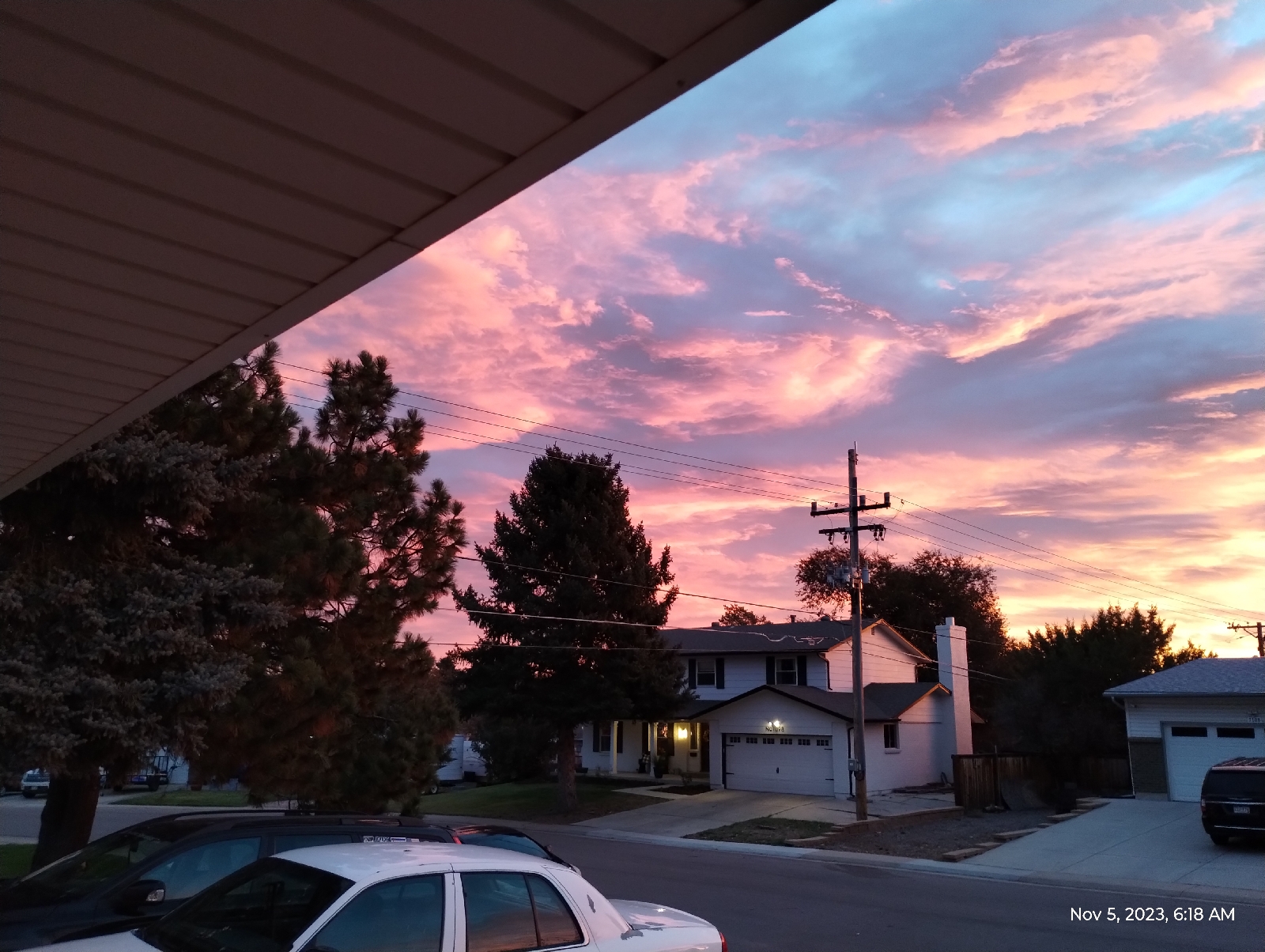
An advantage to getting up early. As badly as it messes up my day if I wake up even a half hour early, it's the only way you catch certain things, these gorgeous sunrises for instance. We're out of the monsoons so things are drying out and there's more particulate matter being stirred up by the autumnal winds. And the later church services at  Christ's Church, Denver start at 10:30 so, to be on time, I need to get up at 6:00 to give my heart medications time to get into my system, and be out at 8:00 in case I have to wait a half hour on the train at Arapahoe Station. 

Since I'm hiking in my old neighborhood around University Boulevard, I decided to visit my old church there. I have friends and many good memories there and am considering returning for an Advent service next month. It's a depressingly rare event. This is only the second time since I moved over three years ago. (I've been there several times, still associated with their library.)
The University campus is always good for a stroll. The building in the foreground, the Cable Building, isn't actually a part of the University, being a monument to the cable industry. It's not immediately apparent how prominent the cable industry is in Denver.

There is that appropriately abstract statue in front of the Cable Building.
But it fits with the powerful and cyclopean aesthetic of the rest of the campus. Here's yet another shot of the Newman Center for the Arts. That's okay....I like the building with it's towers, rose window that actually look like a rose, and sun dial.
Between the college and the residential parts of University Boulevard is a row of high rise apartments.
It's fall and all the non-indigenous plants along the boulevard are in full color.
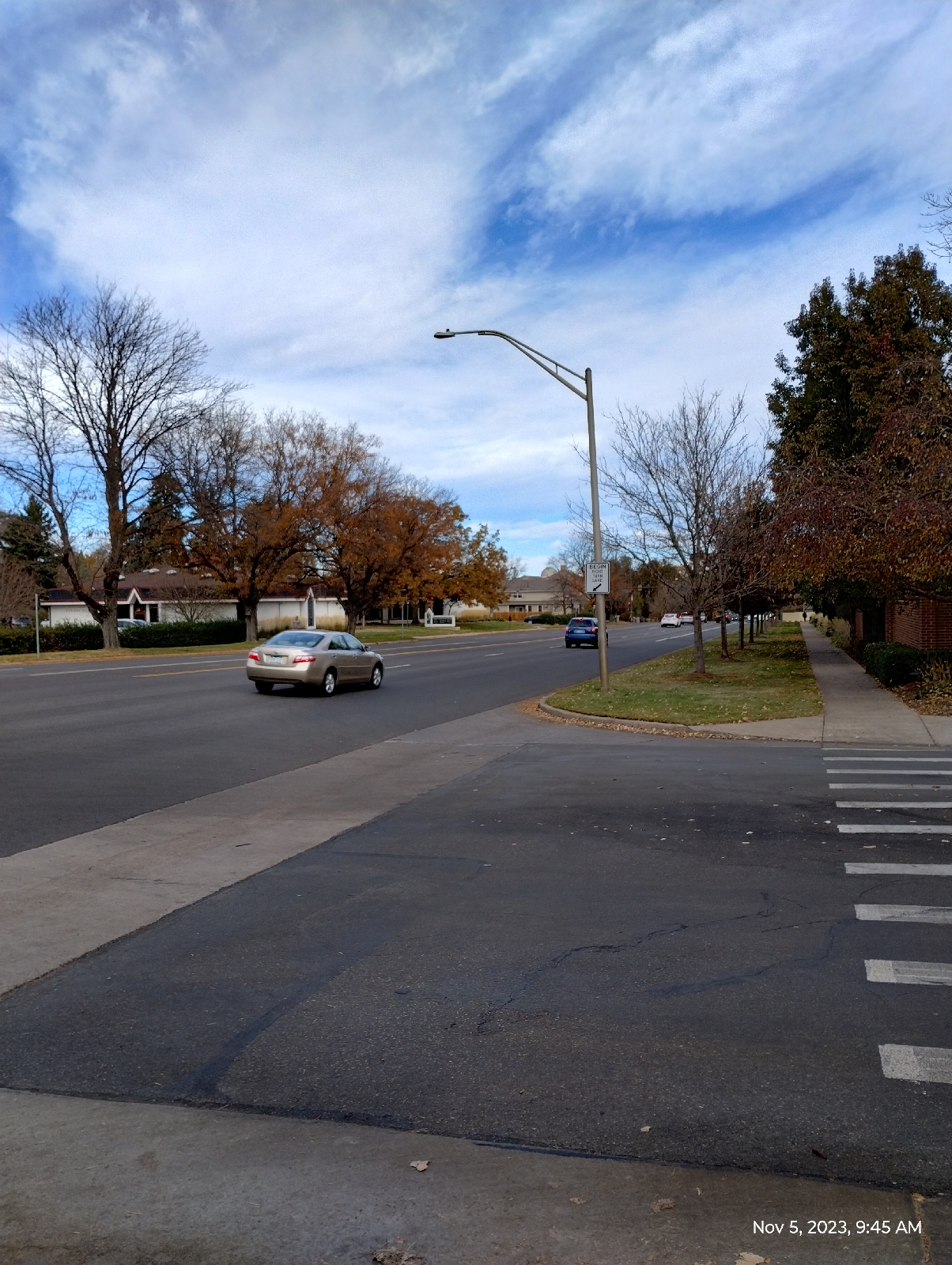
Cherry Hills is an affluent neighborhood but Christ's Church, in the middle of it all, is a varied mix of a lot of different kinds of people that get along like a family. It's refreshing to experience. It's an Episcopal church but a large proportion of the congregation is Baptist and another is Catholic. Lake Woebegone should take notes.

The emphasis that day was the Feast of All Souls. Many don't realize that Halloween and it's associated All Hallows Day and the Feast of All Souls are not pagan celebrations.... they're Christian from their inception.

Syncretism is almost a human process. If you can't beat them, absorb them. I have no problem with that but I'm necessarily a pagan Christian. Being a werewolf in the church sorta demands it. Syncretism is a fusion of cultures. Halloween is a good example. Many cultures, pagan and Christian, are concerned with people who have died and "gone on". Samhain was (is) one of four seasonal, originally Gaelic festivals marking the end of harvest and beginning of the darker part of the year. It was thought that the boundary between the worlds of the living and the dead was thinnest at this time so celebration of relationships with those who had died including defense against the "dangerous dead" was appropriate.

The natural Christian equivalent was remembrance of departed Christians. Canonized saints were Christians who were exemplary in some way, often martyrdom or the performance of miracles. They had special days of recognition, feast days or other celebrations. But for most parts of the Christian church, all believers are considered saints and recognition of all the saints whose lives are not celebrated by special days occurs at the end of October and the start of November. Halloween is "all hallows evening", the night before All Hallows Day.

It was a good visit. I was surprised that, after over three years absence, so many people would remember me. Of course, these were people who stood by me when a mysterious ailment put me out of operation for a month. A church family is true family.

My favorite "Halloween hymn" is Ralph ("Rafe" not "Ralf") Vaughan Williams' "For all the saints" and that was threaded all through the service. It's as if they knew I would be there. And All Saints' Day isn't just for remembrance of departed friends and family. It's a day of welcoming and baptisms.

Advent Season is coming up and I'll be trying to visit again. By the way, in Orthodox Christianity, Advent comes before Christmas.... they're two different things.

After services, I headed back to the train station with a short stop at the main intersection on campus for a milk shake.
That doesn't look like a very old university but keep in mind that Denver was established in 1861 and there was no city here before 1858 when gold was discovered in Colorado. The Denver isn't much older than the University of Denver.

The requisite shot of the Rockies (heh, that phrase is now in my spell checker)....the last time I took an elevator to the top deck of the RTD parking garage, the mountains were not even visible because of the weather. Here are some more shots from up there 
The Valley Highway (Interstate 25) and University Station.
The campus and more mountains 
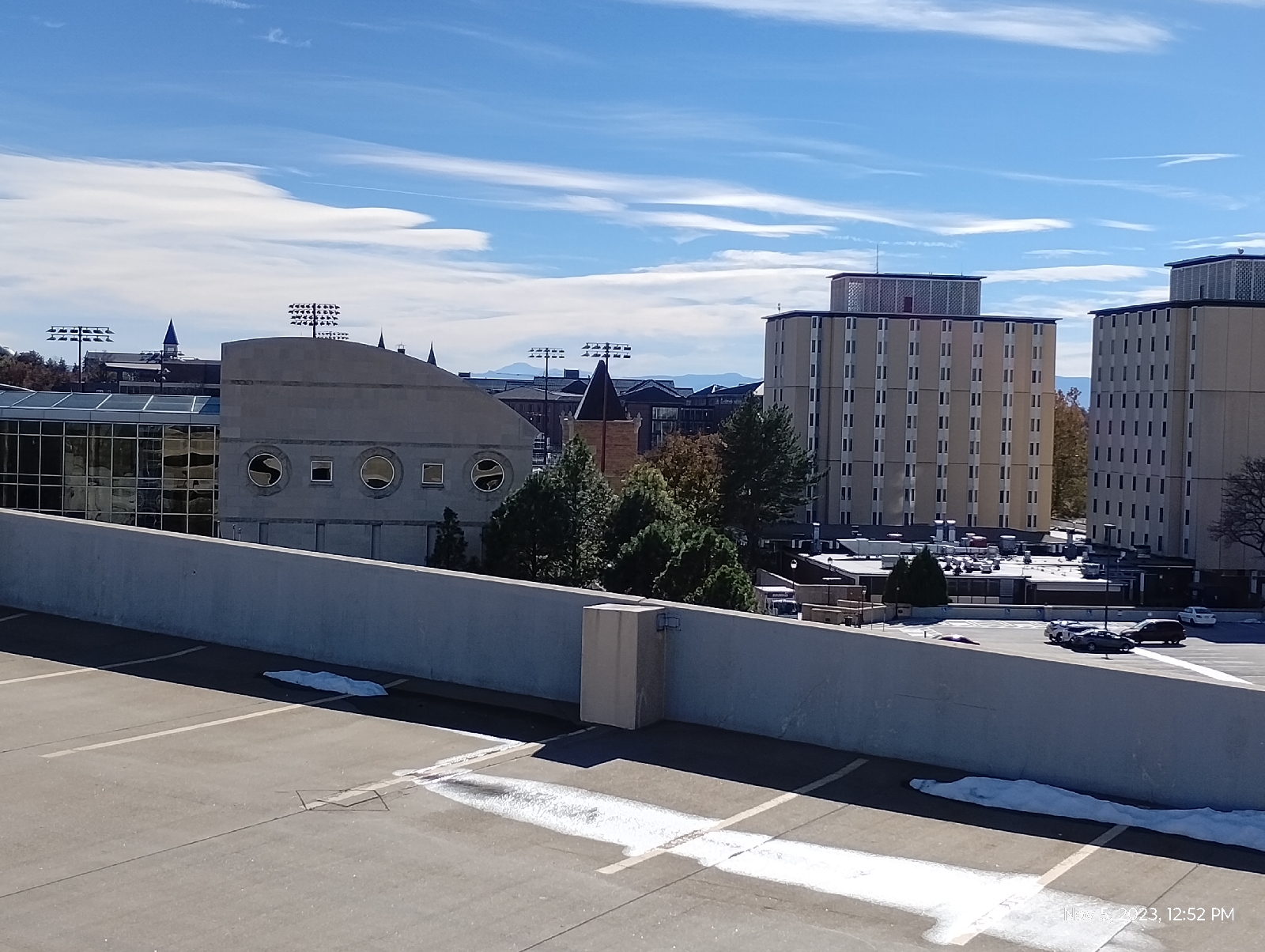
More of the campus and the mountains. If you enlarge the photograph, you can see Pike's Peak just over the end of the (curved) Cable Building.
Across the Interstate toward Washington Park, which will be a destination for my next station-to-station hike. There's also a good view of the Denver skyline.

Back at Village Center (Arapahoe Station) I saw these shiny grasses. Grasses really are underrated as ornamentals, but when you live on the plains, they rise in prominence. I'm going to guess that these are Miscanthus sinensis, or Silver grass.
It's cool how different light so drastically changes the appearance of things.

Are there places in your area that hold a deep significance for you. It's fun to dig deeper and learn more about them. They make good hiking destinations.

Monday, March 28, 2022

The Dawson formation - and a bit about safety

Still looking for an outcropping of the Dawson formation, I headed down to the Englewood Reservoir. The geologic map of the area showed that the bedrock of a couple of sites there was Dawson sandstone. Here's the Rockd map I was looking at.


Those darker beige splotches at either end of the dam embankment are Dawson formation bedrock. The satellite image looks like this.

Geologic maps are the primary tool of the field geologist. It's not always obvious what's beneath your feet but, when you hold a geologic map, you hold the collected knowledge of the geology of an area. Add a satellite image and a topographic map and you're set...well, assuming you know how to read them.

For instance, it doesn't take much imagination to see that, before the dam was built, Willow Creek had carved a valley right through the Dawson sandstone. The surrounding materials are much more recent stuff laid down by local streams...the colluvium I've been talking about.

The dam changed the face of the area. Again, it would be difficult to tell how much of this material was moved in, and how much was just rearranged dirt from the site. The plaque above tells a lot about the dam. It's purpose is flood control. At flood stage, Willow Creek changes from it's current swampy state to a small lake  the embankment is 55 feet high and the reservoir can store 652 million gallons of storm runoff. After the devastating floods early in Denver's history, the city really took flood control to heart. Other examples in the area are the Holly Reservoir, Bear Creek Lake and the Mount Carbon dam, and Strontian Springs dam in Waterton Canyon.

Englewood Reservoir dam

The sandy colored ridge in the distance is underlain by the arkose sandstone of the Dawson formation. Most sandstone is composed almost entirely of quartz sand, laid down in the past by erosion and deposition by water or wind. The parent stone was often granite or gneiss but quartz is the only thing left after the feldspar, mica, and other materials are weathered away. Arkose sandstone isn't rare. About 15% of the sandstone you see will be arkosic.

The stuff washed out of the Colorado plateau to form the Rocky Mountains was dumped quickly onto the plains and buried so that the feldspar didn't have the chance to decompose into clay. Arkose sandstone is the result. Here's a stream tumbled piece that I found on the site.

The broken face doesn't have any tool marks, so this is not likely an artifact. There was probably a weak plane between the granules that make up the rock and it just broke apart. Microphotographs show that the mineral grains are still pretty much intact.

You can see clear quartz, white feldspar, and black amphibolite. Sandstone with more than 25% feldspar is considered arkosic. This specimen is loaded with feldspar.

I use a clip-on microscope with my smartphone for the photomicrographs in this blog.

This is the hill on the west side of the dam where the Dawson formation reemerges. A formation is a group of rocks that consistently appear together and can be distinguished from neighboring rocks. The Dawson formation underlies most of the Denver area and is composed mostly of arkose sandstone with some mudstone (shale) thrown in.

This is the ridge on the eastern side of the dam over the Dawson sandstone. If the dam were not maintained, it would wear away, so grasses and other plants with deep roots are encouraged to grow there. The top soil they create is why the bedrock isn't visible and it would be rude (and illegal) for me to dig around in it. But it is interesting to see how the hard sandstone under the surface influences the surface features of the land.

The clay's here expand when they get wet and when they dry out, they contract and crack. I saw these cracks with something growing in them. Looks like writing, doesn't it?

From a distance, the plants looked like they might be a moss so I got on my belly to take some photomicrographs and, turns out they're grass seedlings.

......................................................................
I've talked about safety and disaster preparedness on this blog before.

I think there are several reasons that many people are unconcerned about what they would do in an emergency. It's likely that they have never had a major disaster happen to them...yet, so it's not in front of their minds. Also, familiar surroundings don't feel dangerous.

But can you think of anyplace in your home that would be hard to escape from in the event of a fire? I bet you could. Do you even know how you would get out of your bedroom if you awoke one night to the smell of smoke?

Can you list all the dangerous events that could occur in your area and would you know how to survive them? Are they the same hazards you might encounter In your favorite vacation spot?

Blake Kelly is a Boy Scout that's interested in safety and disaster preparedness. I thank him for sharing the following link.


Take a look. It might save your life one day.

Friday, September 10, 2021

Grass

For lifelong learning, most of your time will probably be spent in your own neighborhood, and that's okay. The same things that make the universe go, that create stars and make atoms spin, are the same things that make your local world go. And all places have their points of interest.
I live at the western edge of the great plains. We have some nice wildflowers including my favorite, milkweed. The plains are home to spectacular sunflowers and there's a patch of solanum rostratum, buffalo bur, that had taken up in our back yard.

But the headliners of the plains are the grasses and their relatives, the sedges and rushes.

Most people aren't that impressed with grasses. They aren't very colorful. "Hey. I have a lawn. What's so special about grass?"

What grasses lack in color, they more than make up for in patterns. Take the three grasses I spotted the other day on a grocery run.

Setaria grasses include some of our  grains like millet and korali. These wild ones are little puffs.

These silky grasses are called bromus or cheat grasses. I identified them using Google Lens, an app that will take a photo and give you options to identify what's in the picture. I've found it very useful for identifying everything from wild plants and animals, to architecture, to landscapes. 

Blue Grama, the state grass of Colorado, puts out feathery blooms. 

Different grasses bloom and seed at different times so any hike down the Little Dry Creek trail will give me something different to see.

What's special about your area?

Monday, July 1, 2019


--- Terminus: Wheat Ridge ---

I'm not going to recommend the Wheat Ridge/Ward Road Station for tourism. The G Line that services the station is rather unspectacular with the exception of the Arvada Olde Town Station that looks like a nice place for shoppers that like quaint little villages. It has that feel. But my target was the terminus in northwestern Wheat Ridge, the only RTD light rail station in Wheat Ridge.

The G Line runs through a corridor of industrial zones and the Wheat Ridge/Ward Station is no different. It is surrounded by industry, but it does have some interesting points.

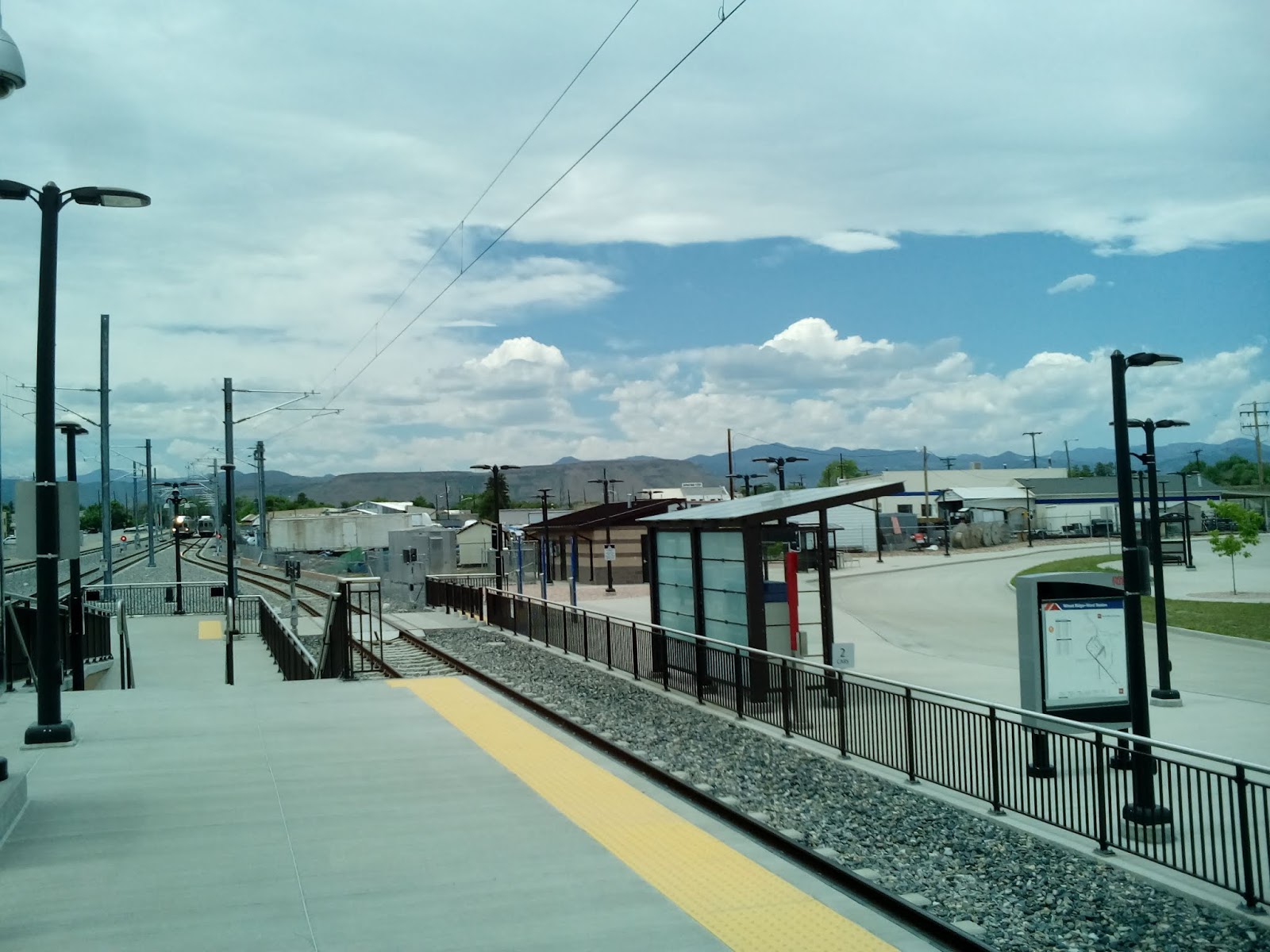
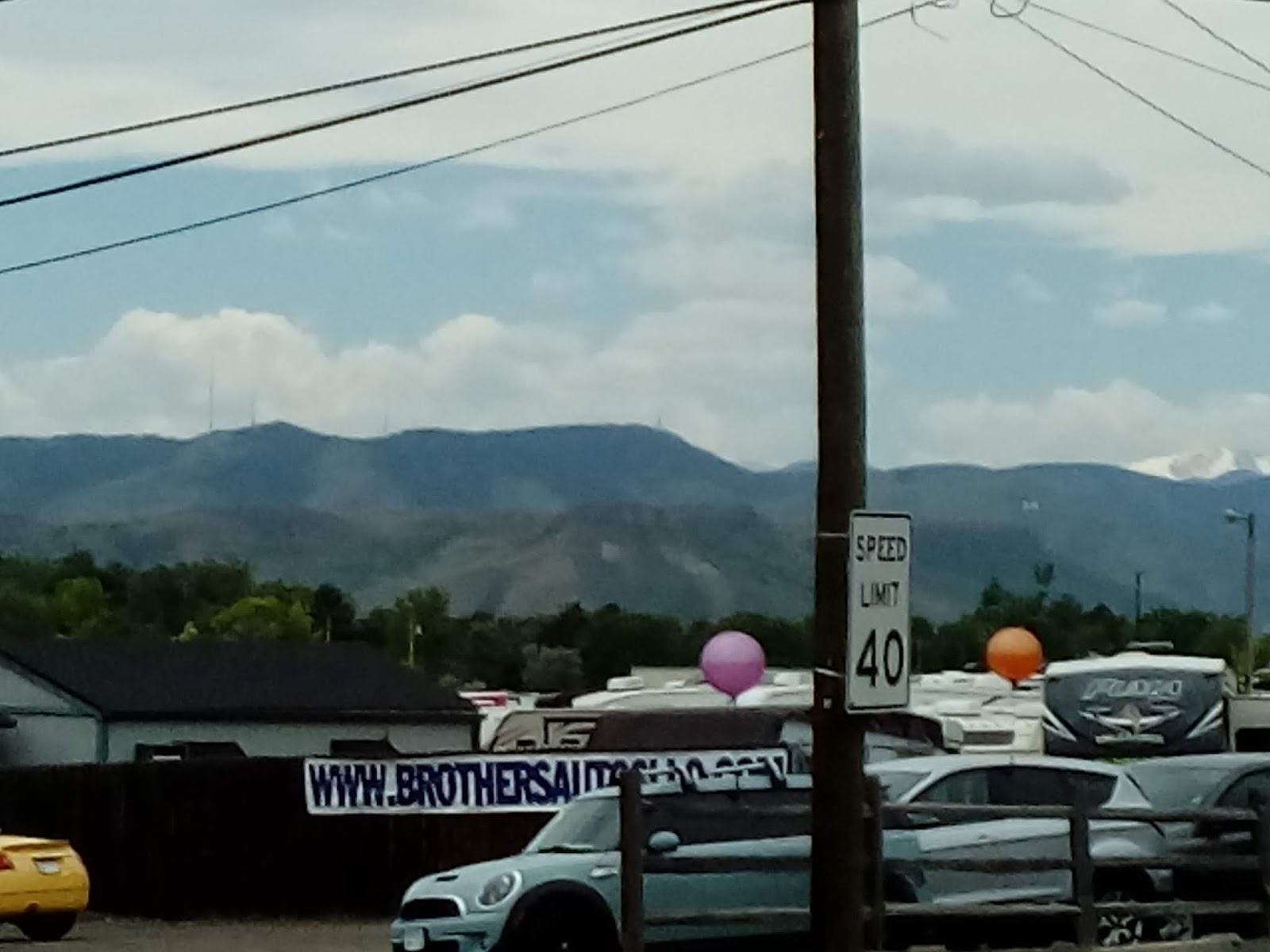
The station itself has parking for 290 cars and is a clean, attractive site. It isn't far from the foothills of the Rockies and especially offers some nice views of North Table Mountain. I was tempted to hike on over to the mountain but I'm not as familiar with that area as I am some parts of the Denver Metro area and I might have been disappointed by the real distance (as contrasted with the apparent distance) and lack of access to the mountain. Anyway, I am planning to visit the mountain in a couple of years when I look at the geology of the area.


                          [Photos of Wheat Ridge/Ward Station and the Rocky Mountains beyond]

One thing that I like about Colorado is the variety of showy wildflowers here. In the Southeast, most of the nice indigenous plants were woodland flowers and one had to do some hiking to see them. Here, any vacant lot may be a home to some pretty plants. One common plant with showy flowers is the thistle. Colorado has 15 native species and 5 non-native species, loved by bees and butterflies, browsing wildlife and wildflower enthusiasts. The one I found in the grassy burm of the light rail station is (I think) a nodding thistle (or musk thistle), considered a non-native, noxious weed.


                                                                     [Thistle]

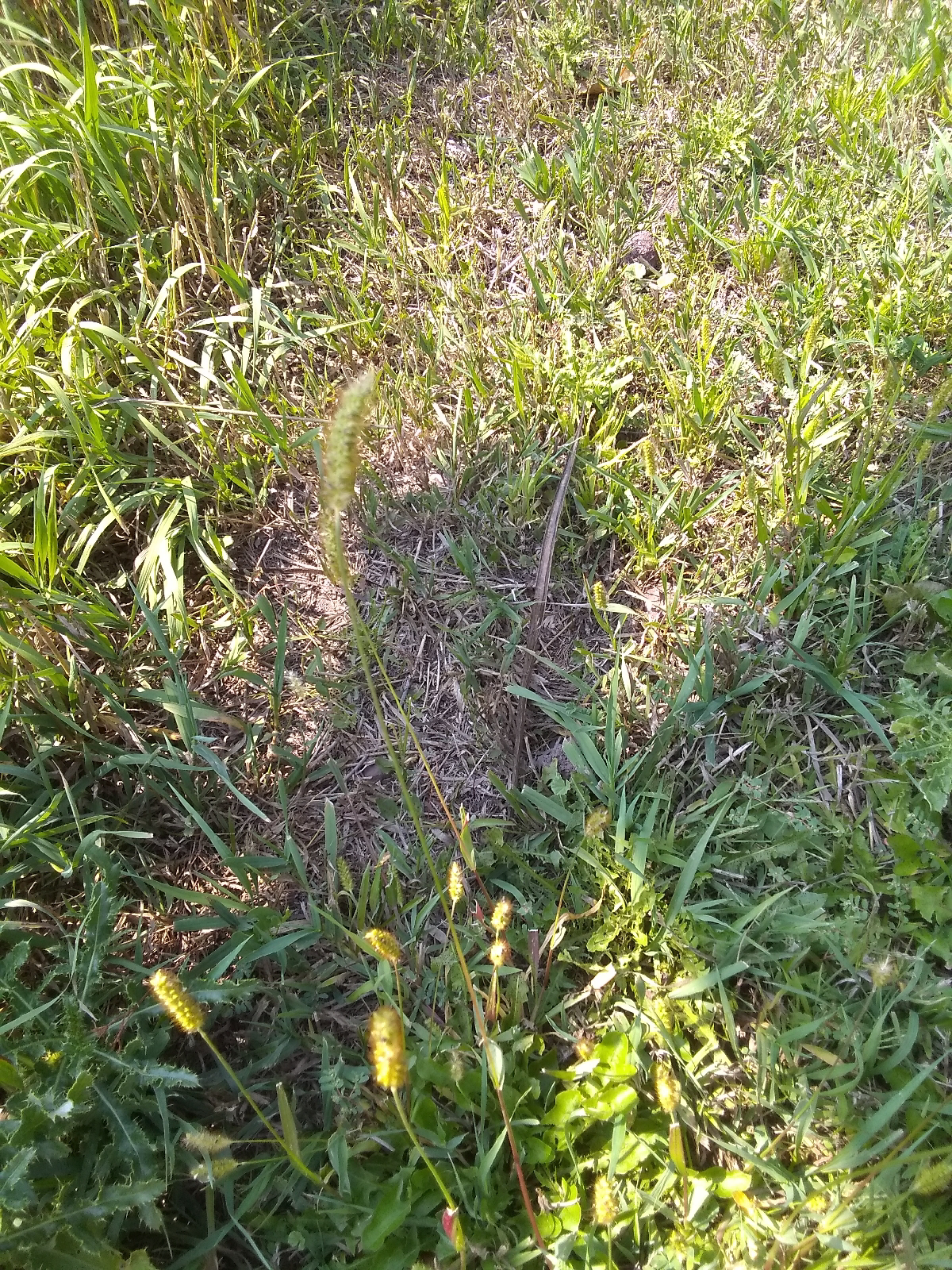
As much as Denver is associated with the mountains, it's still a plains city and the great variety of grassland grasses are represented here. This foxtail barley is pretty common in the area. We have lots of it in our back yard.

                                                                  [Foxtail barley]

The stations of the RTD are micro-museums. Many of them display narratives of their neighborhoods. At Wheat Ridge/Ward Road you can read about the relationship between Denver and the mountains....and gold. G, in the G Line stands for "gold". The windscreens at the stations on the G Line tells the story of gold.

The artwork at Wheat Ridge/Ward Station is a modernist sculpture called "Anchored by Place". It was created by artist and art educator Michael Clapper.

                                                                [Anchored by Place]

You can read a lot about the stations of the RTD light rail, their art, including the windscreens, and stories connected to the stations and their neighborhoods at the FastTrack website, http://www.rtd-fastracks.com/main_1 .

If you follow me in my adventures and want to check out any of these places, you can prepare by going to the FasTrack site.

After wandering around the station, I walked down to Ward Road and a convenience store where I picked up a snack and then returned to wait for a train for my trip back home.

Along the way, I noticed this clump of a favorite wildflower, milk weed. Despite it's name, it's a gorgeous flower. Monarch butterflies will only lay their eggs on this plant. Check out the Fish and Wildlife website (https://medium.com/usfws/spreading-milkweed-not-myths-5df8c480912d ) to clear up misconceptions about this valuable plant.
                                                                        [Milkweed]

Ward Road has some nice views of North Table Mountain. The two Table Mountains are the exposed innards of an ancient but dead volcano. Their volcanic origin is made quite clear by the basalt deposits around the crown. Basalt is a dark, fine grain rock that is formed close to the earth's surface. It hardens too quickly for the melted magma to form large crystals like granite. These unearthed bones of dead volcanoes are sometimes called "fossil volcanoes". Luckily, they're as volcanic as the Denver area gets.


                                                            [North Table Mountain]

Regardless of how boring any area looks, if you look a little closer, you can usually find fascinating facts right in front of you.


Wednesday, June 6, 2018

Oxford to Englewood


                                                  [Englewood station from the bus gates]

Englewood Station is a good place for a "home station". It is quite interesting in it's own right and it has all the amenities. The Englewood Community Center is part of the complex, with it's city offices, the Englewood Library, and the headquarters and museum of the Open Air Arts Museum, which is scattered all over Denver. A short walk brings a hiker to three shopping centers and several banks, and the shopping area along Broadway. There is a WalMart and my favorite restaurant in Denver, the Beirut Grill.

It was a hot day when I took a bus down Yale Avenue to Englewood Station. The big spire in the picture above is not only a piece of art, it houses the elevator from the plaza at the Civic Center to the bridge across to the light rail station.

                                                         [Englewood Civic Center]


                                                         [Art plaza with fountain]

The fountain is constructed to allow a lot of personal wetness. Geysers of cool water erupt from the lawn around it and a hot summer day, of course, draws crowds of children in swimming attire. I was tempted, but was dressed completely inappropriately for fountain activities. Instead, I stopped into the Civic Center for a restroom and some water. There, I looked at some of the exhibits including Cherrelyn, the horse trolley (and the horse), and Museum of Outdoor Arts (and it's bear). If you ever visit Denver, you will notice that Bear is a major motif around town.

                                                                         [Trolley]


                                                                          [Bear]

The starting point for my hike was just one station down from Englewood. Here are more of the tiles decorated by children at Oxford Station.

                                                                  [Oxford Station art]

I am told that the art across town and the ornate rail stations and highways are fairly recent.

                                                                    [Oxford Station]


            [Santa Fe highway overpass]

                                              [Mountains from bridge over the South Platte]

We've been here before. It's the bridge over the South Platte River where the Mary Carter Greenway/Platte River Trail and Bear Creek Trail meet. You can see from the mountains frames in the bridge's railing that, regardless of the heat on the high plains, Mount Evans still has a lot of snow. At 14,271 feet, it's still pretty cool up there.

I wandered over to the Steak and Shake to buy a much needed milkshake and then I came back to the Greenway to begin my hike. I found these two waders, perhaps little blue herons, on a sandbar in the river. This area is a good place for spotting water fowl.


A little ways on I noticed this patch of sturdy grass, which I have been unable to identify (anybody out there have an idea?).


                                                                           [grass]

At the point where Dartmouth crosses the South Platte, it has absorbed Big and Little Dry Creeks (Little Dry Creek merges right here at Dartmouth in Englewood.), Bear Creek, and several smaller tributaries and is becoming a respectable river.

                                                                [Platte at Dartmouth]

Several of the old train depots have been preserved in the area. Englewood takes the arch shaped facade design of its depot as an emblem. It reminds me of the Spanish architecture of the Catholic missions. Some of the depots, like the Littleton depot are still at the tracks, but for others like this one, the tracks have moved away. Now, it is the front for a community garden.


Since the columbine is the Colorado state flower, I had to take a picture of these nice specimens.


Back at Englewood station, I walked up to my favorite Denver restaurant, the Beirut Grill, for lunch. On the way back to catch the bus for home, I spotted the Englewood Trolley that ferries passengers at no charge between 19 stops among the businesses near the Englewood City Center.

                                                               [Englewood Trolley]

The area around the city center is an open air art museum with an entrance to the east guarded by these two durpy looking dogs. (Actually, they're sculptures of Greek Temple dogs. evidently, if you made trouble in a Greek temple, you would be licked to death.)


                                                             [Greek temple dogs]

This stalwart gentleman rests down Galapagos street.


                                                                            [Boar]

At the other end of the street, these two sage and weary looking lions keep watch.


                                                                         [Lions]

And my last stop on the hike was the bus stop beneath the obelisk and arch bridge.

Not every town has such an extensive open air art exhibit as Denver, but just about every town has statues. There's a bole weevil statue in Enterprise, Alabama, and a chicken statue in Gainesville, Georgia. Selma, Alabama had a lot of statuary including some that caused constant controversy like the statue of Nathan Bedford Forrest (namesake of Forrest Gump and the first leader of the Ku Klux Klan) and the less infamous gargoyles on the First Baptist Church at Lauderdale and Dallas. What statues does your town have and what's their back stories?

Folks rarely give grasses, even the ornamental grasses in gardens, a second glance but, if you look closely, you will find intricate patterns in their blooms and seed heads.

If you have streams in your area, check out the areas where streams merge - the confluences. They are often favorite areas for water fowl and other wildlife - why do you think that would be? What's different about stream confluences?