

Just across the road from the north entrance to Red Rocks Park, Alameda Parkway climbs the Dakota hogback. It's blocked off to vehicles except for the tour buses and maintenance vehicles of Dinosaur Ridge. The Friends of Dinosaur Ridge museum especially designed for younger visitors is there, also.
Dinosaur Ridge, a very prolific source of dinosaur fossils, has been designated a National Natural Landmark. There are dinosaur fossils from there and the sister site, Triceratops Trace, in museums all over the U.S. Although the park charges for guided tours, it's free to hike over the hogback and read the interpretive markers. It's a fascinating hike.
Apropos to this blog, Dinosaur Ridge dissects the Dakota hogback. That means I won't be showing you all the sights. You'll have to visit in person for that, but it's well worth the visit. The dinosaurs are waiting.
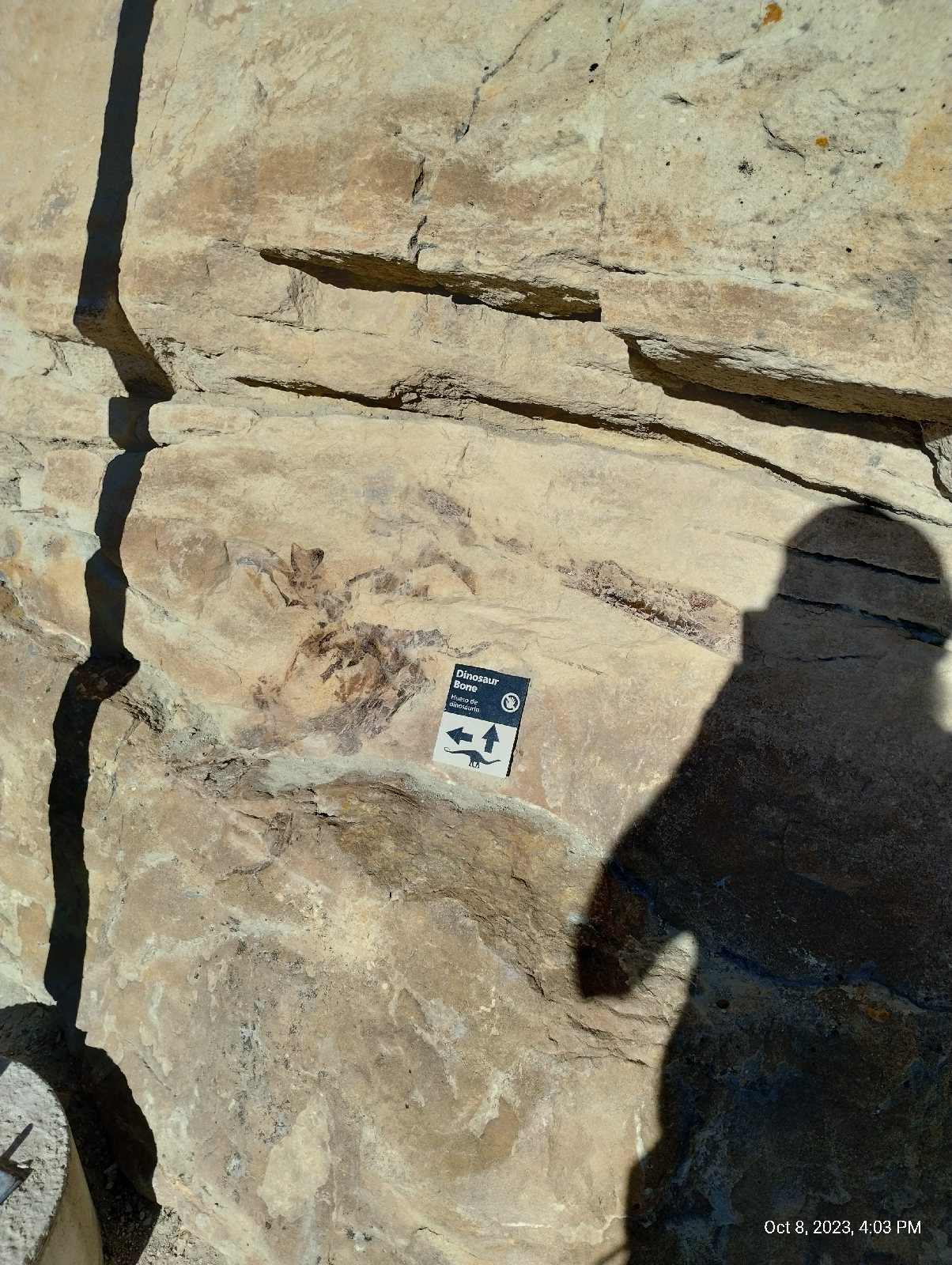
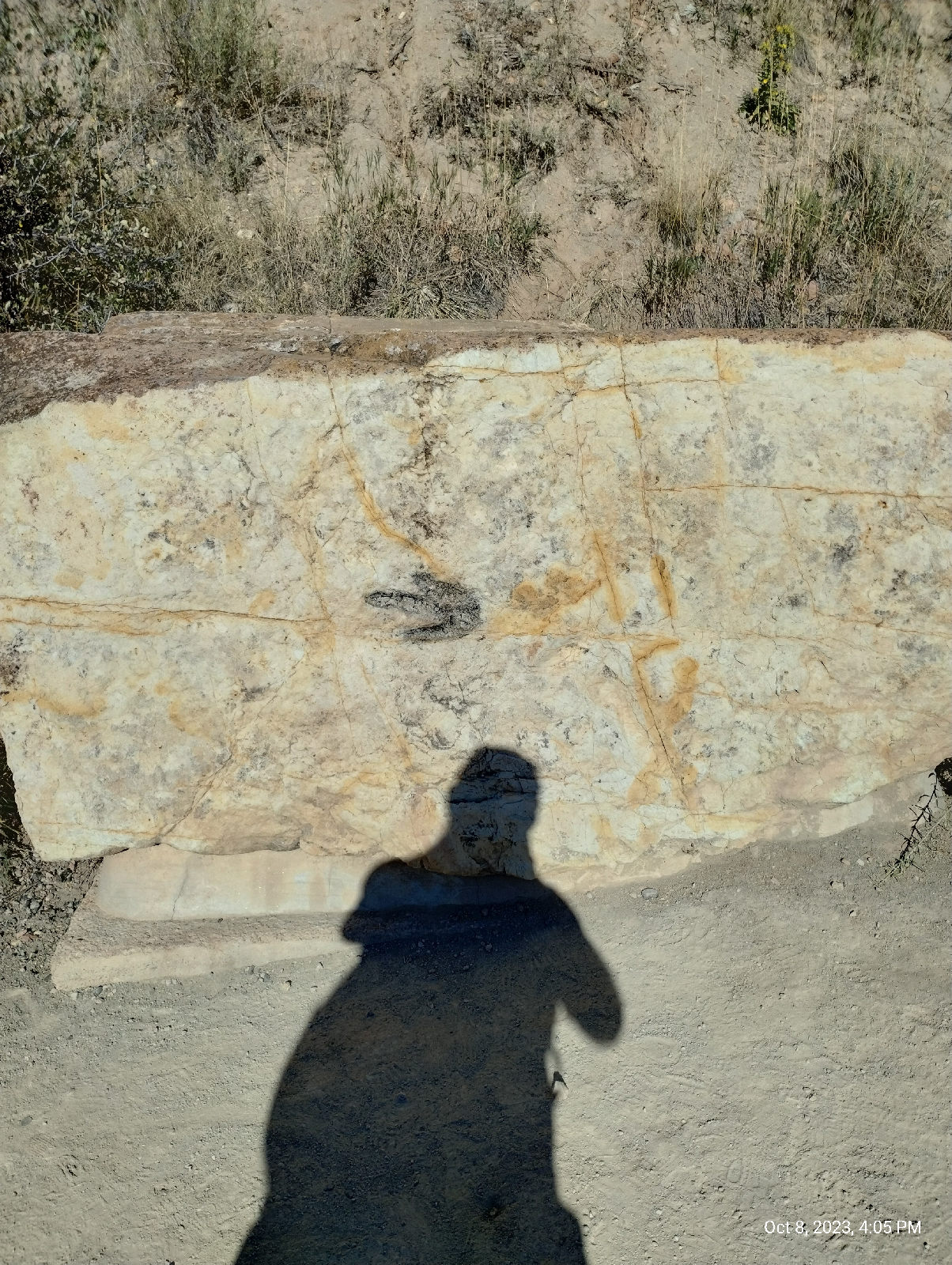
The dinosaur fossils in the sandstone consists of both bones and footprints. The skeleton above is surprisingly intact. The bones underneath are more typical. At this site, the dinosaurs died upstream and the bones were washed downstream in a humble.
The footprints can be crowded and tell paleontologists a lot about dinosaur behavior. Evidently, they were very social creatures.


Dinosaur Ridge is a veritable bone quarry. It was a major site in the infamous bone wars waged by the paleontologists Othniel Charles Marsh and Edward Drinker Cope. You should look it up. It's a prime example of how scientists should not behave.

Remember the Law of Lateral Continuity? Remember the layer of volcanic ash back in Morrison? Here it is again on Dinosaur Ridge.

The beast that left the claw marks in this rock (it was sand back then) ate dinosaurs. It was a crocodile and it's modern relatives haven't changed a lot! Not all the fossils in Dinosaur Ridge are of huge animals. It was a marine environment so it's not surprising to find shells and worm burrows.

and wave ripples.

The lower layers of the hogback are stone made from compacted mud: mudstone and shale. The size of particles that make up rock is an important hint to deciphering it's geologic history.

The finer the sediment, the more languid the streams or the further away from the sources. They don't call the Mississippi River "the Big Muddy" for nothing. It starts off in the mountains tearing them to shreds as powerful rivers like the Missouri and the Tennessee but by the time it has grown into the huge river that flows into the southern states, it carries a lot of weight in water and has lost most of its boulders and gravel. It's weighed down with mud and silt.
This Benton Shale is made from silt from far away mountains and was deposited in the shallow inland sea. We know that because we find the fossils of marine animals in it. This rock has been dated at around 92 million years.
The Benton shale is near the bottom of the pile and so is the east entrance to Dinosaur Ridge. There is a little paleontology museum there but I was in a hurry to get to Golden before nightfall more from outright fatigue than any worry about hiking at night. Just as Alameda Parkway comes off the hogback, it intersects Roony Road and the last stretch of my hike


