

Back at Orchard Station, these pedestrian bridges are usually prime sites for photo ops.
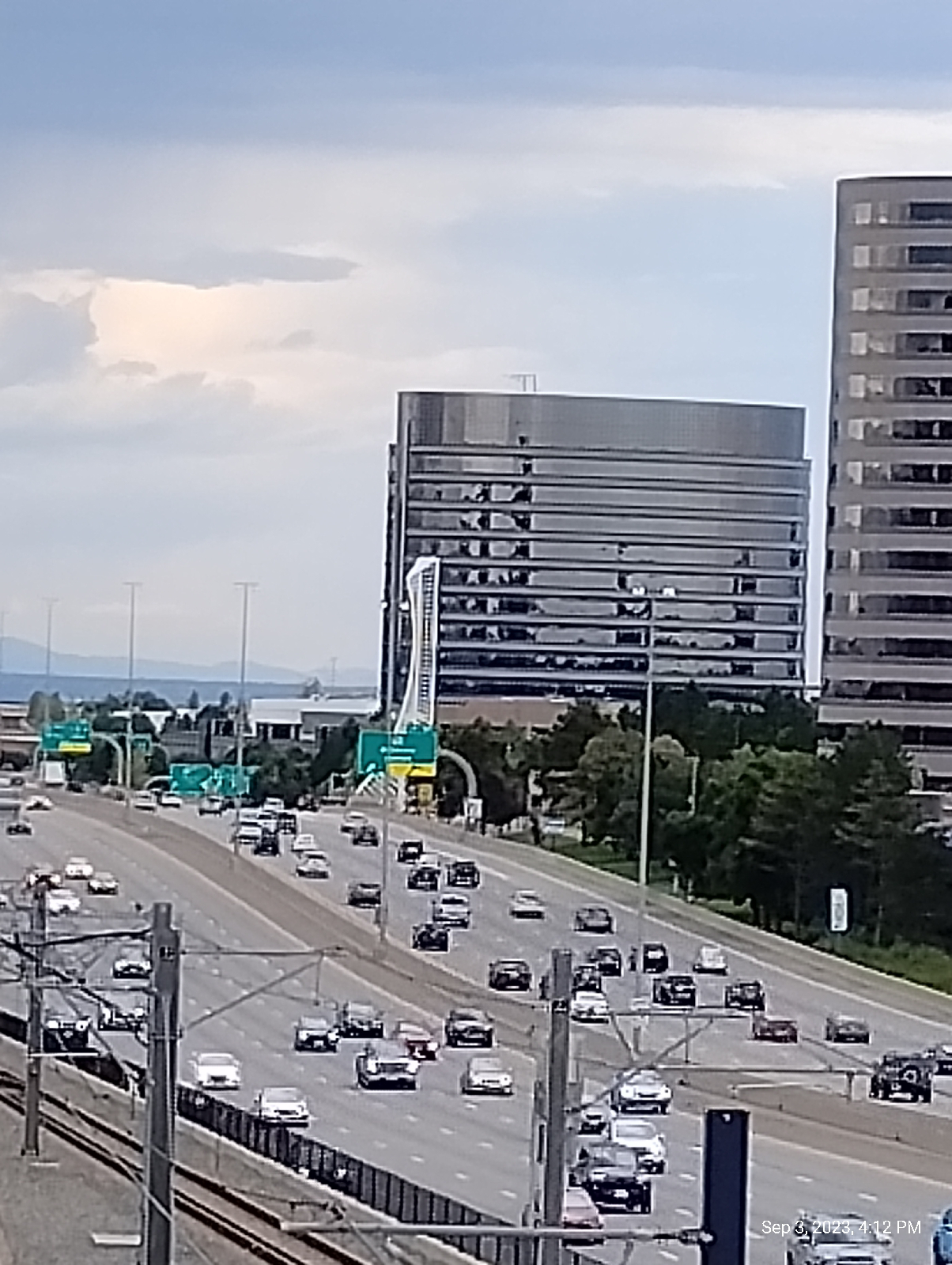
Orchard Station is one of three light rail stations servicing the Denver Technological Center (see the
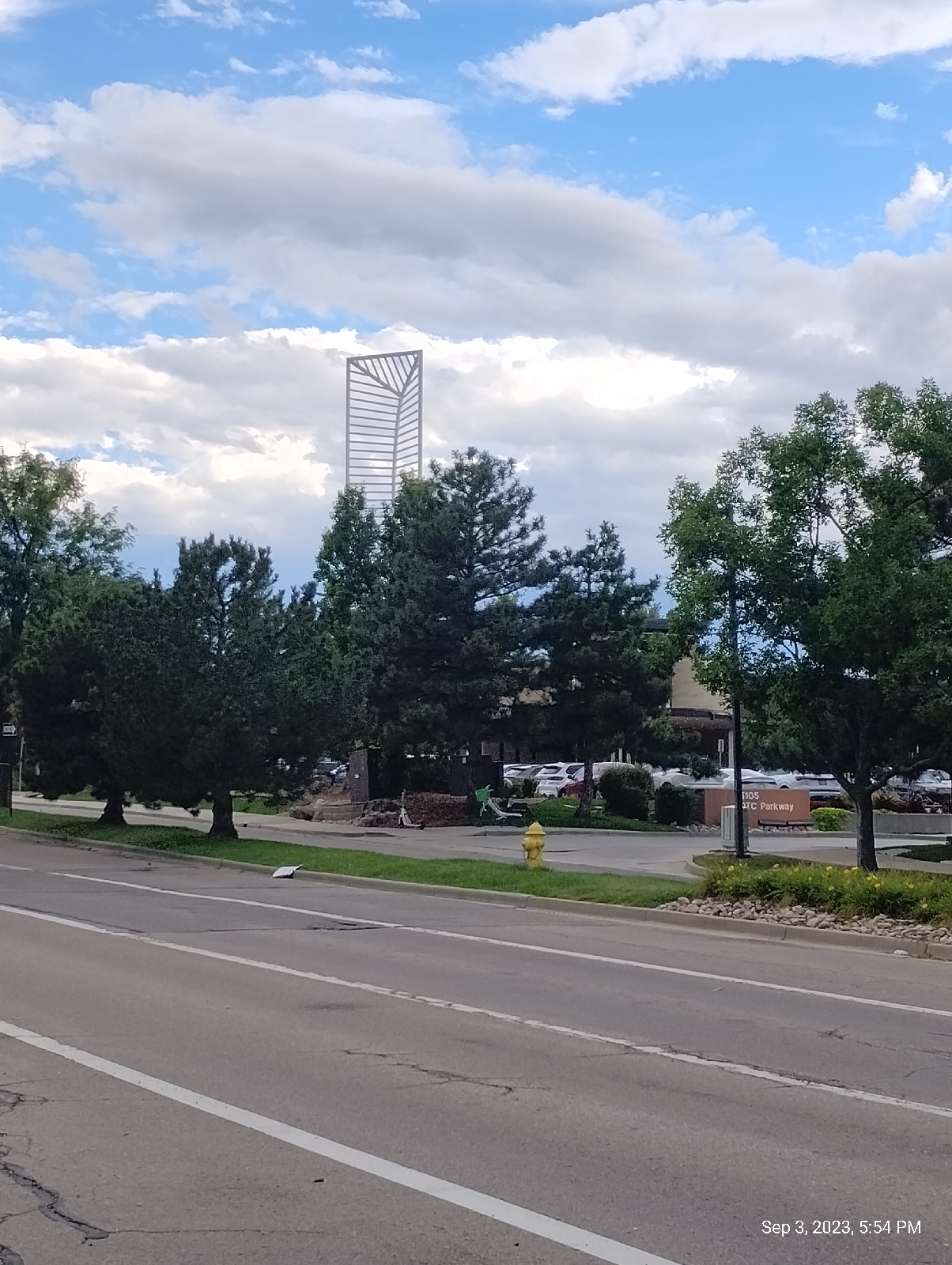
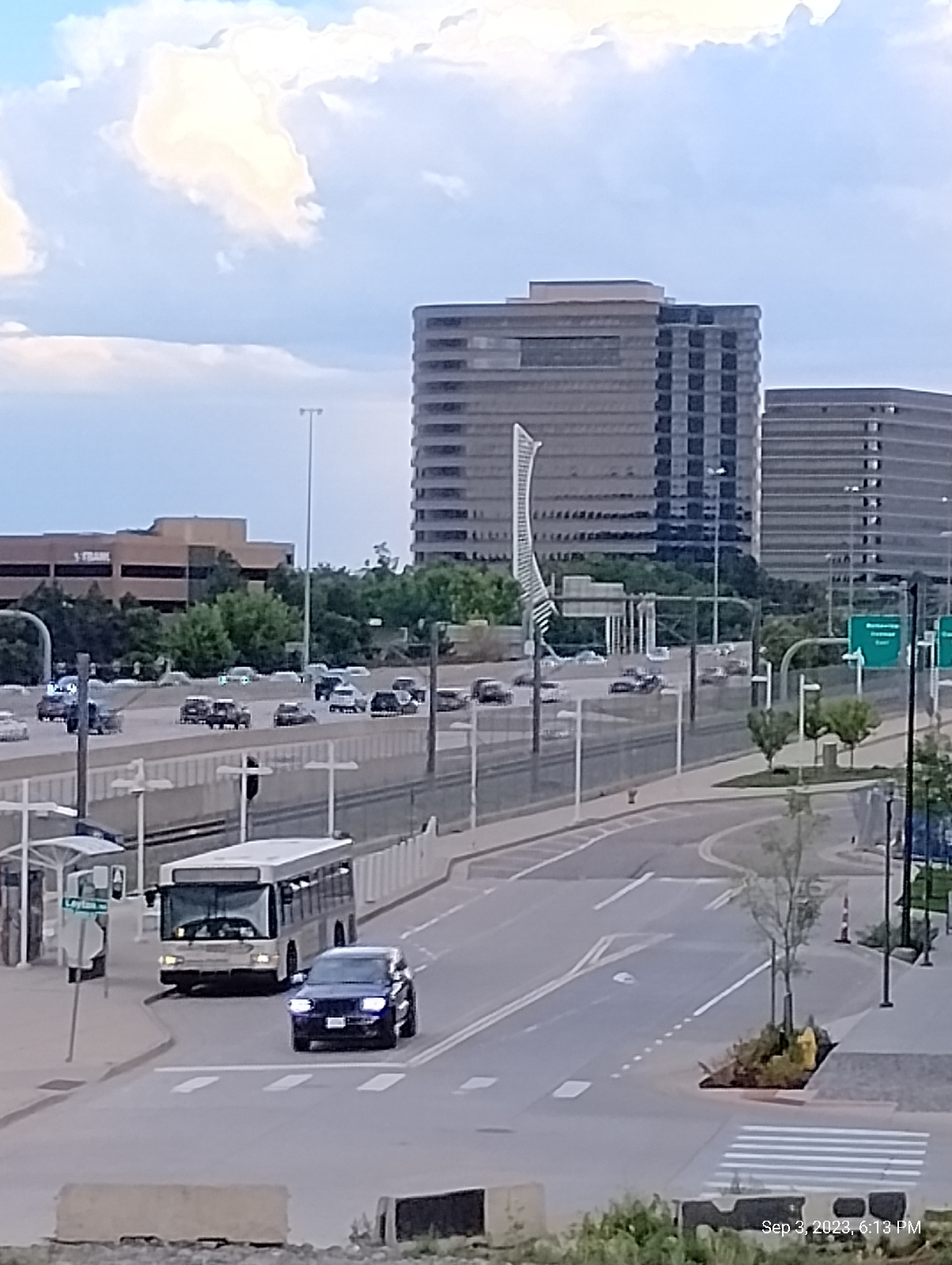
August 23 blog). That tall....object...in the distance is the DTC Monument. It tells you that you have arrived (at the DTC). You'll see it again (and again).

Village Center is the next stop south in the E/F Lines so Tower One is right there.

Pike's Peak is also very visible in the distance. That's not surprising since it can be seen far across the plains. It's the second highest mountain in the Front Range and, in fact, is sorta isolated from the mountains around it. The massive chuck of granite is much older than the rest of the Rockies. Even when the gold prospector's were crowding toward places like Golden and Arvada and points west, their rallying cry was "Pike's Peak or bust!" Because Pike's Peak;was the most outstanding sight on the horizon
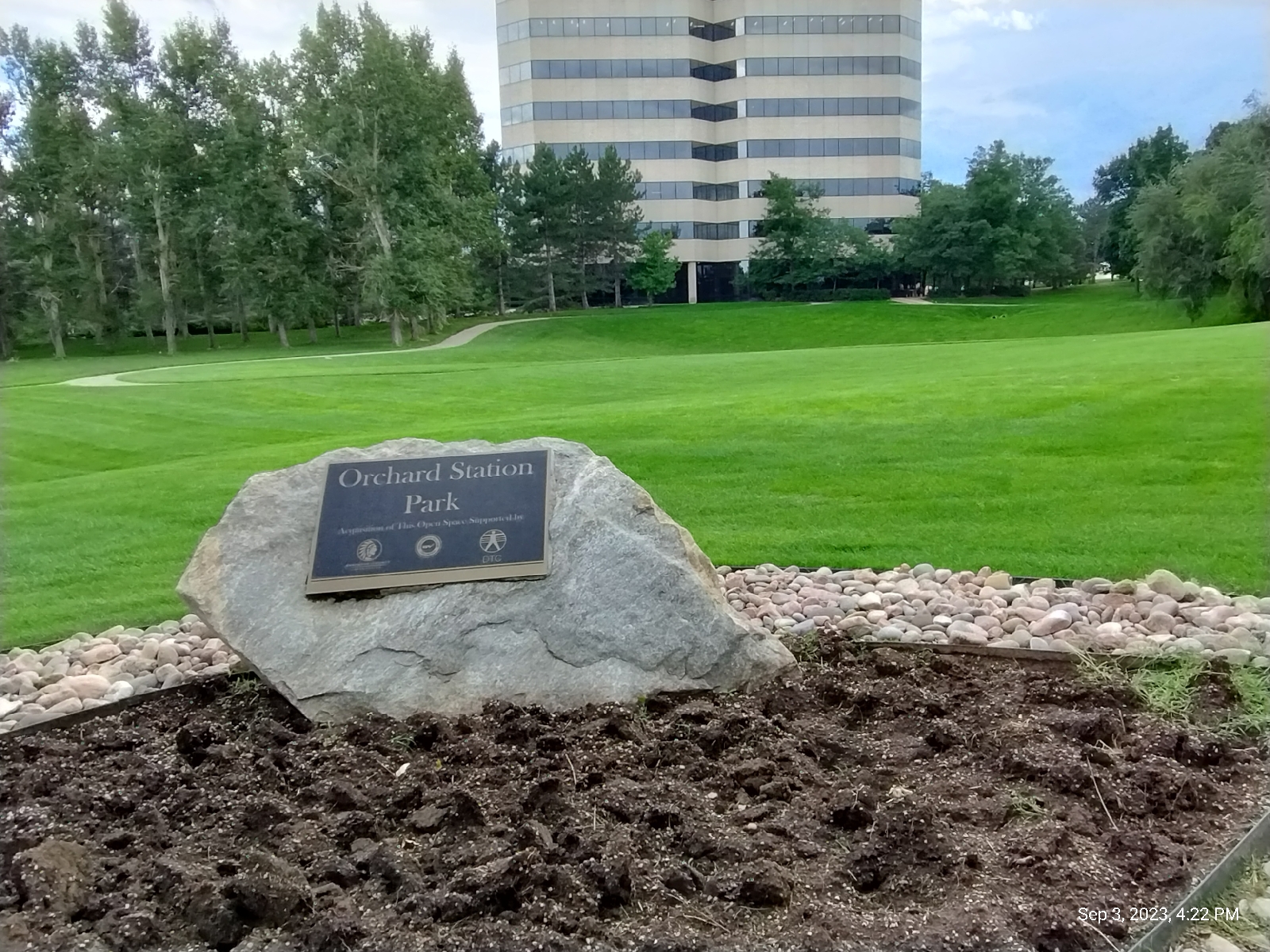


The pedestrian bridge leads to a strip of landscaped area bordering the Interstate that widens out to Orchard Station Park. It has this mound topped with a stone circle. Those are pretty common in the Denver area... they're pretty common everywhere there are humans.
Carl Jung said that the circle represented the self so it's a recurring theme. Actually, it's a sturdy shape so it recurs in architecture and biology (living things need to be sturdy). It was a major preoccupation of Greek mathematicians...construction could only be done with a straightedge (unmarked, not a ruler) and a compass. It makes sense. The only regular shapes you see over and over in nature is the straight line (plumb line and horizon) and the circle (preeminently, the sun). Circles help us navigate and often interfere with navigation. When we try to walk in a straight line without help, we usually end up going in circles

Orchard Hills Park, in Greenwood Village, is one of those urban parks that, if you narrow your vision, you can almost convince yourself that you're in the country.


Goldsmith Gulch is the last "gulch" in Denver proper that I've hiked. There are a few in the Littleton area and north of Denver. Again, these gulches are actually canals intended to drain rainwater off the slopes of the South Platte River and Cherry Creek valleys. Goldsmith begins a little to the south in Silo Park and ultimately empties into Cherry Creek.
I came out on Yosemite Street across from Saint Catherine Greek Orthodox Church.

Saint Catherine of Alexandria is a major saint of orthodoxy, and especially Eastern Orthodox churches. According to tradition, she was a scholar who converted to Christianity in the fourth century and rebuked the Roman Emperor Maxentius for his brutality. He gathered 50 pagan scholars to debate her. They lost and some of them converted and were executed. Catherine was imprisoned and tortured but was healed by Jesus and His angels. When she was brought from her cell unharmed, Maxentius ordered that she be broken on a spiked wheel. When she touched the wheel, it fell apart, so the Emperor ordered that she be decapitated and she encouraged it. When her head was cut off, a white fluid poured out instead of blood.
The Catherine's wheel of fireworks, by the way, is named after Catherine of Alexandria. Joan of Arc claimed her as a major influence.


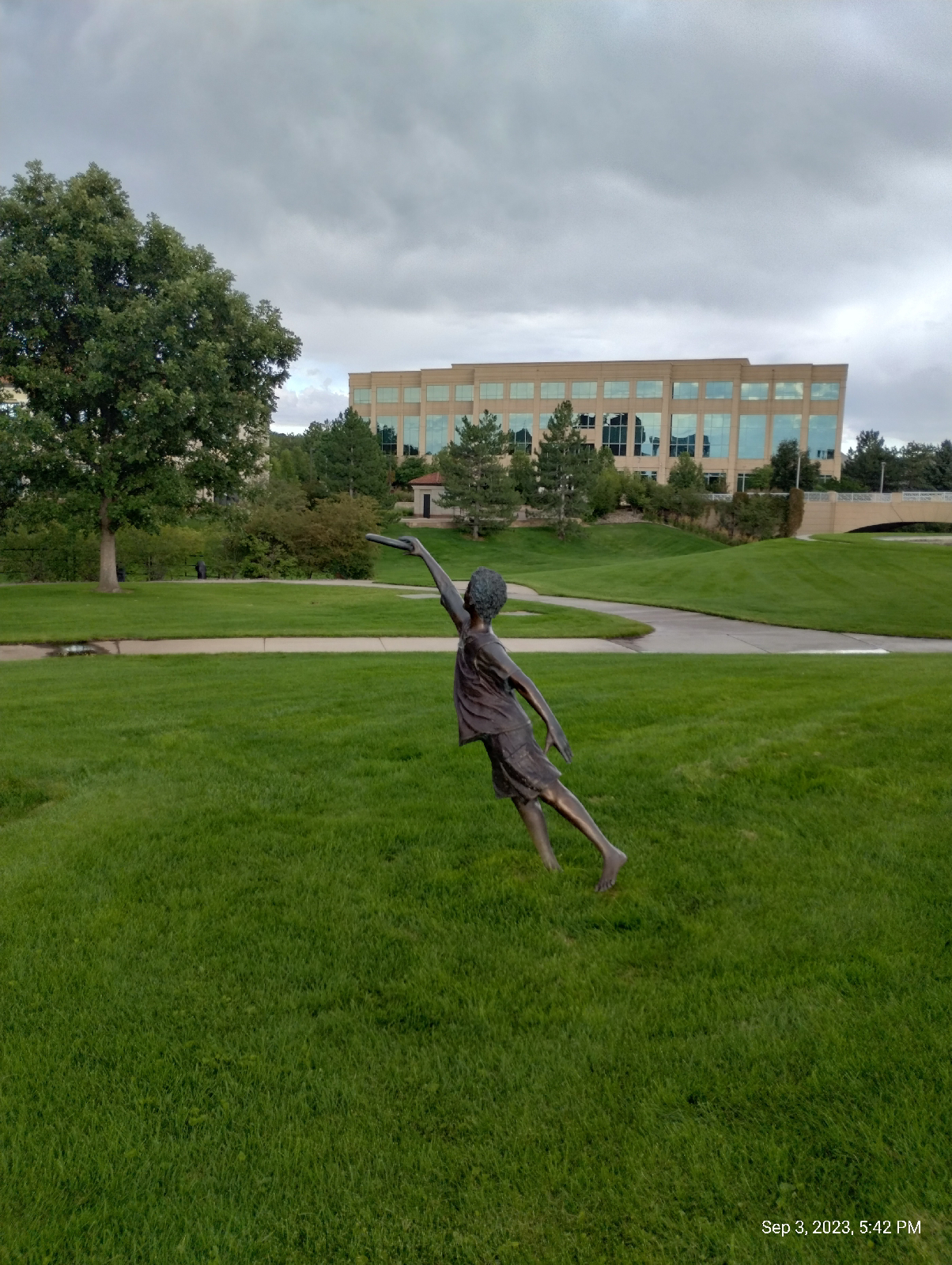
The statues around the Denver Tech Center emphasize leisure activities. This one is a snapshot of a boy catching a disk...just before the disk touches his hand. It's impressive. The bronzes at DTC Boulevard and Bellevue catch figures in difficult poses.
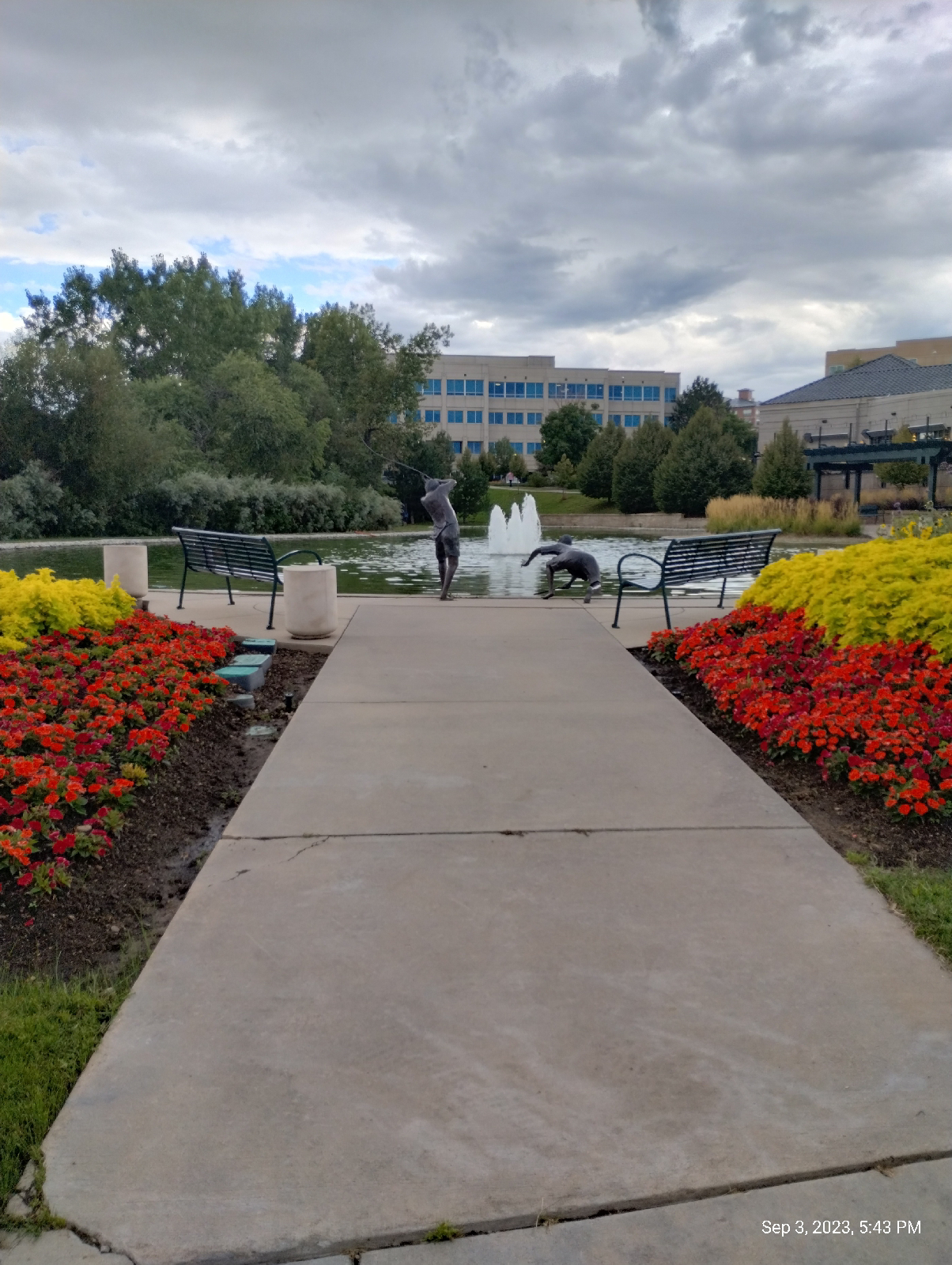

More sights around the Tech Center...


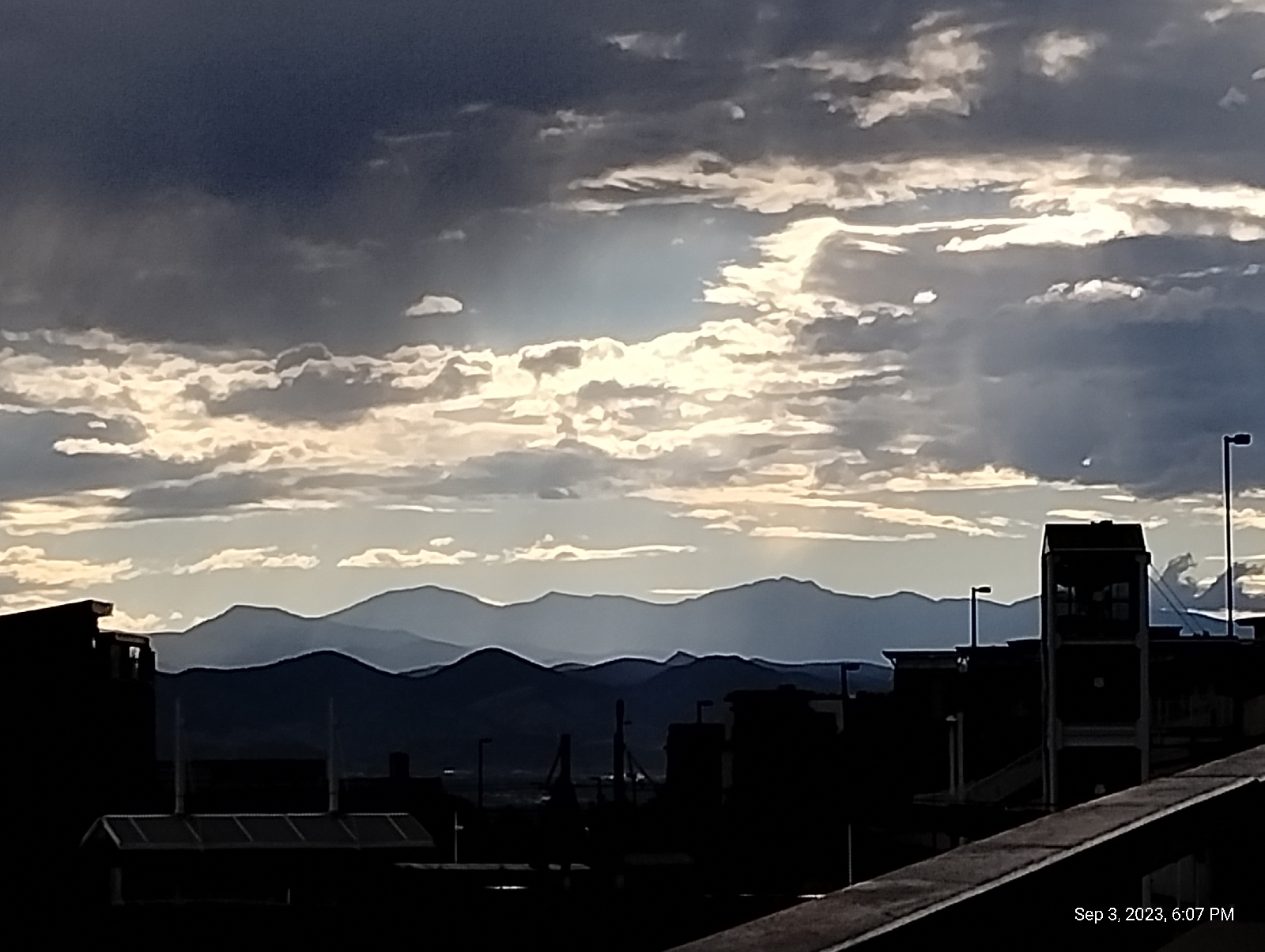
I saved the requisite shot of the Rockies for the end because you can't beat the view from the Union Street overpass at Bellevue Station. It's also a good place to look over the DTC and the light rail station which is surrounded by tall buildings.



Bellevue Station's art piece is the tunnel under Union Street that leads to one of the elevators to the bus stop at the top.

"Thunder Over the Rockies", by Richard Elliot, is the first reflectorized art tunnel in the world. I didn't notice the bison ghosts until I looked at this photograph.

While I waited for a train, storm clouds moved in and met me at Arapahoe Station. There was a Jelly Roll concert that night at Fiddler's Green Amphitheatre which was packed. The huge crowd didn't seem to mind that they were getting soaked.
I had rain gear and didn't mind the thunder especially since it delivered a brilliant, double rainbow to welcome me home.


