Showing posts with label sociology. Show all posts

Saturday, January 25, 2020

Meanwhile...

Obituaries are a thing.

America is an odd culture. We avoid the topic of death like a plague yet the Internet is packed with discussions of people who read the newspapers (and Internet) obituaries everyday of their lives and why they do it. A cursory examination of Google Scholar did not turn up any studies, nor could I find any data, on people who read obituaries.

There are many citations on Google Scholar about obituaries, though...how to read them, how to write them, how and why to research them, what they tell us about the people they discuss, what they tell us about society in general.

It's interesting reading. You might take some days to study obituaries.

Why am I talking about them? 

Well, it's a lead in to my excuse for my absence from this blog for a couple of months.

First, a very close friend died. Learning can be…somber, but it's always potentially edifying. I learned that, as you get older and old friends die off, it gets easier to shrug it off. Bereavement is about loss, not pity for the deceased. After you loose enough, you get used to it and life teaches you that everything isn't necessarily about us. The world goes on.

When you know you are dying, you can either say, "I'm dying," or "I'm going to live until I die." Mike showed that it is entirely possible to do the latter with all the determination of a 20-something with nothing but life ahead of them. Another person I knew who "died well" was my father. You can learn a lot from folks like that.

A week later, I went to church and couldn't sing. The next day, my annual episode of bronchitis was in full swing. I have learned to expect it every year. Some truths are just nasty. So, for a month, I sat around hacking my brains out and wearing myself down.

A close friend and college math professor was scheduled to attend a mathematics conference in town and I had said that I would go with him. It was the week after my hacking cough had let up and I was flat worn out but I keep my word, and I really did want to go since I'm an amateur mathematician and it would give me something to blog about. I had the opportunity to go as his guest, which meant a 95% discount. On my pension, it was an offer I could not refuse.

Of course, it was mostly sitting through lectures and strolling around math art exhibits and vendors (I bought gifts for folks). There was a surprising lot about my own, not so deep interests - math education and statistics. So, at least I enjoyed further abrading my life force. And I got some close-ups of the big blue bear.


At least, between bear and horse, the more personable one is the more accessible.

Finally, I'm on the mend and I've even knocked out another terminal hike (that leaves three to go) and that will be the subject of my next blog.

I recommend not avoiding mental adventures like community lectures and conferences because you think they will be boring. It's all mindset. Things that you expect to be boring usually are.

Shake out the obituary section of a newspaper. Look at some obits online. Do they have a consistent structure? Do you know an obituary reader? If so, why do they enjoy reading obituaries? What do obituaries tell us about our attitudes toward death? What do obituaries tell us about our attitudes toward life?

Thursday, August 8, 2019


--- News From Denver ---

The title references "News From Lake Wobegon", Lake Wobegon being the mythical town in Wisconsin popularized by Garrison Keillor in the radio show, Prairie Home Companion. In an episode where Keillor angsted about lying on a public broadcast, he intimated to his audience the surprising secret that, in fact, Wisconsin is also mythological.

And, on point all places are mythological. Denver is a myth. If you live in the east, you may think that you know that Denver is a large city in the Rocky Mountains. The truth is that Denver is situated on the plains and the land around it is relatively flat. To the east, all the way to the Mississippi River, the ground slopes gently away. Yes, there are only 27 mountain summits east of the Mississippi River that are above Denver's elevation and the highest is only 1402 feet higher (Mount Mitchell in North Carolina reaches 6684 feet), but Denver is flat land.

Another myth I had to disabuse myself of when I moved to Denver was that Denver is cool year round. I don't understand why I am so intolerant of heat. I was born in Southern Florida and grew up in Georgia and Alabama, not cool climates, but temperatures above 90 degrees hurt me. About three months out of the year here torment me.

Furries....do you know what a furry is? If you have watched documentaries on the furry community, you probably don't. The documentaries are all hype and sensationalism. But, if you live in Denver, you should. I've never seen a city with so large a furry population. You can't drive through town without spotting several vehicles with Colorado Furry stickers.

One of my housemates was hosting a panel at the annual Denfur Furry Convention last weekend and I bought a ticket to provide support (I operated the video camera.) There is a considerable overlap between the furry and therian communities and the panel was there to explain therianthropy to the furries in attendance. I'm also a therian, so I had other reasons to be there.

But I'm not a furry and tend to boredom at other peoples' conventions. Furry is basically a hobby - a fandom, not a lot different from, say, a convention of model railroad enthusiasts. There are some differences, but they aren't huge and, except for the furry suits and lack of model trains, they are not that obvious to the onlooker. Furries like anthropomorphic art. An anthropomorphic animal is a nonhuman that stands on two legs, talks, and wears clothes like a human. They used to be called funny animals. And they like dressing up as anthropomorphic animals. Many of the costumed mascots for sports teams and theme parks are, in fact, furries.

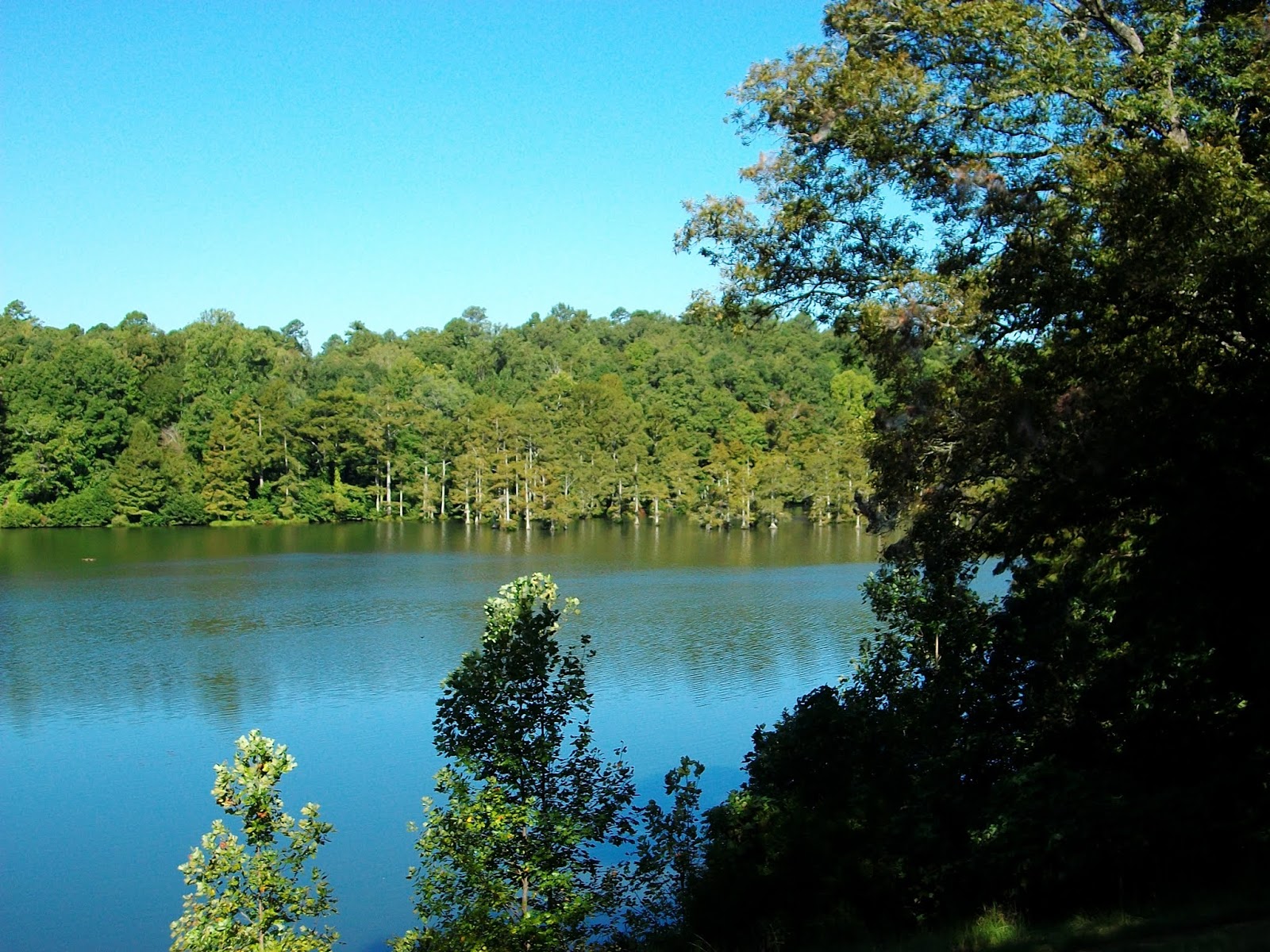
I have attended one other furry con, the Memphit Fur Meet at Olive Branch, Mississippi, near Memphis, Tennessee. I did not stay at the hotel. Instead, I camped at Mississippi's Wall Doxie State Park in the northern part of the state. It is one of the most beautiful state parks I have visited, situated in a cypress and pine forest surrounding an incredibly blue lake.


                                                           [Wall Doxie State Park]

I went to the conference, again, to take part in a therian panel. I also wanted to see some friends who had stopped coming to the annual campout I hosted. That was while I lived in Selma, Alabama, before I had to take an early retirement. I enjoyed hanging out with friends, but three days there was too long and I spent most of the time wandering the grounds of the hotel. I planned to volunteer in later years but life intervened. Within a year, I knew that I would be moving soon.

After close to two hours of bus travel to the Crowne Plaza Hotel in Aurora, and after checking in at the registration desk, my first order of business was to find a restroom. Then, I went to see the art show.

Many furries have an exquisite sense for art, not just visual art, but also music, athletics, and acting. A person dressed as a wolf was at the lobby piano pounding out a very decent Rhapsody in Blue.

Appreciating the art took about ten minutes and I met my housemate, who is quite accomplished and in demand for setting up art displays. After exchanging greetings with a couple other familiar therians, I headed to the restaurant for a light lunch.

The Prosciutto Margherita Flatbread was very tasty and hit the right spot.

When I finished eating, it was about a half hour to the panel so I went there and waited. About a dozen people attended the panel of three presenters.

Instead of taking the two hour bus ride back home, I spent a couple hours with my housemate and two out-of-town therians, mostly in the vendors room. There were a lot of vendors this year, a sign of a healthy con. This is the second Denfur and it was well attended.

It was also well managed, with Safety Wolf threading through the crowds making sure everyone was well hydrated and not too alcoholized. Two of my companions obtained approved status and one got an unapproved ribbon, of which he was very proud. I think he might have drunk more than Safety Wolf approved. I'm quite uncomfortable in crowds and was being invisible. There was also a big black wolf with a leaf blower keeping the fursuited furries cool.

Kids love costumed mascots, so there were crowds of them milling about the furries. Everyone seemed to be having a good day. I left the con with my three companions and headed back home for a meal. They hung out with the House for awhile before going back to the hotel for one last day of Denfur.

Both the furry and therian communities are fairly new and offer sociologist the opportunity to observe the inception and growth of societies.

Since furries are so prevalent here and there are so many horrible misrepresentations in the media, perhaps you will be interested in finding out who they really are. The International Anthropomorphic Research Project collects data on the community and you can find all kinds of information on their site at https://furscience.com


Thursday, November 8, 2018


--- Pride of Place: Living Memorials ---

We have just celebrated All Saints' Day and Dia de los muertos - the day of the dead. Almost every culture has had some kind of recognition of the dead - of ancestors and powerful figures of the past. Why?

Why not let "auld acquaintance be forgot?"

The last two sections of Pride of Place: Huwerl Thornton, Junior's "Living Memorials: Honoring Your Family" and Kristin Wetmore's "The Amistad Story: Commemorating a Local Narrative" are explorations of co-memoration - the remembering together of past peoples and events.

I am first a sociologist. My primary trainings and interests are peoples and cultures and you will see in this blog many pointers to events and peoples that are important and salient to whatever culture I encounter.

There are many elements of strong, healthy cultures and two are folkways and history. These things can be toxic. Remember (always remember) the character of Nazi Germany, endued in a pervasive and overwhelming folk tradition invented for political purposes - murderous in intent, and remember (always remember) that we have often allowed the same poison into the United State's psyche.

But cultures need anchors in the universe and the greatest anchors are the sense of belonging in time and place.

We remember our past in gravestones, statues, murals, street and place names, and buildings.

The Browns were intimately connected with Denver so when you see "The Unsinkable Molly Brown" or "Titanic" you can think about our Avoca and Brown Palace (even though the Brown palace was another Brown, Molly did stay there a week after the Titanic disaster.)

We remember our ancestors because they provide personal connections in time and place. We remember local and national heroes because they anchor us in the world. We remember events of the past, both good and bad, because they are the stuff that sews us into the fabric of the universe. Our existence may be the product of spirit or the Higgs field, but what we are is the product of our histories.

Can you reconstruct where you came from and where your community came from in the memorials that exist and are publicly visible in your community? Even if you and your family are not originally from where you now live, can you see traces of your culture in your new home?

My family has produced politicians, actors, directors, inventors, and ballerinas. I am connected through them to the churning washing machine (Nicholas Van Zandt invented it in 1809), Citizen Kane (Philip Van Zandt played Mr. Rawlston), and the opera Lakme (Leo Delibes composed it specifically for Marie Van Zandt). I am connected to VanZandt county Texas which once tried to secede from the state of Texas but decided to have a party instead, and I am connected by ancestry to the national hero of Germany, Arminius, who trashed a third of the Roman military machine with a few hundred German woodsmen and secured a lasting freedom for his people. Arguably, he's the reason that Martin Luther was able to escape the clutches of another world power, the Holy Roman Catholic Church. My mother's ancestors, the Forehands and Fordhams, were law men of renown and friends of the Younger gang, who were either lawless or heroes according to who you talk to. The Saint James Hotel, where I lived in Selma, was named after Jesse and was a reminder of this anchor I have in time and place. My great grandfather was a lawyer. He was known by his initials: J. J. Forehand. "J. J." of course, stood for "Jesse James".

You are established in the past by your own history. We hold our pasts in us. We are living memorials.


Thursday, October 18, 2018


--- A trip to Latin America ---

Oh, Mexico.
I never really been there so I don't really know

James Taylor

One thing that I enjoy about Denver is the great diversity of cultures here and, even better, those cultures are valued and conserved in ways that are accessible to outsiders like me.

Latin America is a diverse population of peoples in the Western Hemisphere who predominantly speak Romance languages such as Spanish, Portuguese, and French. As countries, most of South and Central America are included. The term "Hispanic" is somewhat narrower, emphasizing Spanish speaking peoples.

In Denver, there are large sections composed primarily of Hispanic residents, but those communities are also mixed and the blend usually forms unities that succeed as neighborhoods.

I've already reported on my visit to the Whittier neighborhood on a tour hosted by the Denver Public Library and lead by Chris Englert of Walk2Connect. On 9/15/18, I joined another Walk2Connect neighborhood tour of the Barnum neighborhood that began at the Ross-Barnum branch of the Denver Public Library.

The trip actually started as many of my trips begin, a hike down to University station, and then a train ride to Alameda Station, where I took a familiar bus route west on Alameda to Knox Court. On leaving the bus, I was greeted by two Denver signatures:


                                                                 [Denver skyline]

and a mural (of course).


                                                                [Barnum mural]

Not very Latin? Like I said, the neighborhoods in Denver mix to form distinctive, often surprising combinations. The neighborhood up Knox Court is very Latin. The flavor is vibrant. People are outside and the area is pleasantly noisy.

                                                                    [Knox Court]

It's different from what I became used to in the South. In Selma, the Hispanic population pretty much stayed to themselves. Not once in the 20 years that I practiced in the area did I have a client from the significant Hispanic community there. They took care of their own. And they were surprised when I greeted them in town - cultures didn't mix much. Except, maybe, in the excellent Mexican restaurant, El Rancheros, on Broad Street.

Here, people are friendly and typically don't resent intrusion into their communities.

Here, there are many vegetable gardens in yards, lot of flowers, and the little row houses have brightly colored facades. The walk to the library is about three-quarters of a kilometer. On the way, I spot a small corner park (Cedar Park) that sports and elephant (again, the circus theme.) I get the idea that there's more to "Barnum" than just a name.) This little park was created by a local resident, April Crumley, and was recognized as a city park by the Denver city government on May 13, 1995.

                                                                     [Cedar Park]

The Ross-Barnum Library is just a little off Knox Court on 1st Avenue.

                                                            [Ross-Barnum Library]

I have seen many community gardens in my wanderings around Denver.  The city encourages them. There are more than 170 DUG (Denver Urban Gardens) plots in Denver and a website to get you in on the action (https://dug.org). The one in the Barnum neighborhood isn't the largest I've seen (I think that goes to the one in Rosedale) but it's pretty big. Aspiring gardeners could do much worse than to visit these plots for inspiration and learning.

                                                               [Barnum Urban Garden]

We walked north to Barnum park, which has one of those gulches that aren't gulches that I've talked about and one of the best views of the Denver skyline.

                                                                      [Weir Gulch]

We met this denizen of the area along Weir Gulch

                                                    [Juvenile Black-crowned Night-Heron]

Again, the circus theme in the park playground...


                                                              [Gorilla and lion]

                                                                  [Denver skyline]

Back in 1978, P.T. Barnum bought some land in this area and made some noise about making it the winter home for his circus. He made exactly four documented trips to West Denver and never wintered his animals anywhere but Connecticut and Florida (I can't see intentionally wintering anything in Connecticut or Colorado - skiing, yes, African animals....?)

Anyway, Helen Barnum, P.T.s daughter did move to the area that would become the Barnum neighborhood with her second husband, financier William Buchtel, who moved to Colorado to treat his tuberculosis. P.T. Barnum ended up selling some of his Colorado land to his daughter for a dollar.

                                                                   [Barnum house]

The Savio House, now a landmark, was established as an orphanage for wayward boys in the 1950s.

                                                                      [Savio House]

You can learn a lot more about the Barnum Neighborhood from this website by the Denver Public Library.

https://history.denverlibrary.org/barnum-neighborhood-history

The Denver Public Library and it's branches are vital as historical archives for the Denver neighborhoods.

My tour over, I walked back to the bus stop on Alameda, returned to Alameda Station, and took the light rail back to University Station and home.

On my latest station-to-station hike,10/12/18, I had planned to stop at the Museo de las Americas in the Art District and revisit a Mexican market in the Barnum neighborhood.

The Museo de las Americas presents exhibitions by local Hispanic artists. On the day of my visit, they were showing El Infinito, pictures of the cosmos through ancient Aztec and modern eyes. Contributors included NASA, Logkheed Martin Space System Company, the Denver Museum of Nature and Science, and Miguel Angel Sanchez Moreiro, who presented reproductions of the Codex Borgia. I learned why I could not find an English translation of the Codex Borgia. It's owned by the Vatican. (sigh).


                                                           [Museo de las Americas]

You can find out more about the Museo here:

http://museo.org

After completing my station-to-station hike, I took a bus back to Knox Court and 1st Avenue in the Barnum neighborhood to visit the small Mi Pueblo Market - small but packed with interesting ethnic groceries, and there's a cafeteria style restaurant there which was also packed (obviously popular). I bought some candy and spices I had not seen in my local grocery stores.

                                                                   [Mi Pueblo Market]

They also have a website.

https://www.mipueblomarketco.com


Is your local library a repository of facts about your community?

What ethnic groups are represented in your community? Are they accessible to visitors? Do the ethnic groups in your community mix amicably while conserving their distinct characters?

By the way, you're part of an ethnic group. Which one is it? Are there any grocery stores near you that cater to your ethnic group?

Wednesday, September 5, 2018


--- Freedom galleries ---

In the South, many schools, libraries, shopping malls, city halls, museums, and other public buildings had a wall where they displayed patriotic documents - the Constitution, Declaration of Independence, the Gettysburg Address, etc. Selma is known for it's connection with civil rights so important statements of political equality were often included such as Dr. King's "I have a dream" speech and the Emancipation Proclamation. I'm sure other areas had their own versions. We called them "Freedom Galleries".

I don't think I've seen one since I moved to Denver and I'm wondering if it was just a phase that the South was going through. I'm puzzled that, when I do a web search for "freedom gallery", I can't find any general information. I do see articles about specific exhibitions.

Do you have freedom galleries in your area? Do they all contain the same documents or are there specific differences from place to place? Do the differences seem to point to differences in locale?


--- Pride of Place: Breaking Down Fences ---

Mending Wall

Robert Frost, 1874 - 1963

 Something there is that doesn’t love a wall,
That sends the frozen-ground-swell under it,
And spills the upper boulders in the sun;
And makes gaps even two can pass abreast.
The work of hunters is another thing:
I have come after them and made repair
Where they have left not one stone on a stone,
But they would have the rabbit out of hiding,
To please the yelping dogs.  The gaps I mean,
No one has seen them made or heard them made,
But at spring mending-time we find them there.
I let my neighbor know beyond the hill;
And on a day we meet to walk the line
And set the wall between us once again.
We keep the wall between us as we go.
To each the boulders that have fallen to each.
And some are loaves and some so nearly balls
We have to use a spell to make them balance:
‘Stay where you are until our backs are turned!'
We wear our fingers rough with handling them.
Oh, just another kind of outdoor game,
One on a side.  It comes to little more:
There where it is we do not need the wall:
He is all pine and I am apple orchard.
My apple trees will never get across
And eat the cones under his pines, I tell him.
He only says, ‘Good fences make good neighbors.'
Spring is the mischief in me, and I wonder
If I could put a notion in his head:
'Why do they make good neighbors?  Isn’t it
Where there are cows?  But here there are no cows.
Before I built a wall I’d ask to know
What I was walling in or walling out,
And to whom I was like to give offense.
Something there is that doesn’t love a wall,
That wants it down.'  I could say ‘Elves’ to him,
But it’s not elves exactly, and I’d rather
He said it for himself.  I see him there
Bringing a stone grasped firmly by the top
In each hand, like an old-stone savage armed.
He moves in darkness as it seems to me,
Not of woods only and the shade of trees.
He will not go behind his father’s saying,
And he likes having thought of it so well
He says again, ‘Good fences make good neighbors.'

Connery, Edward (1970) The Poetry of Robert Frost. Leslie Frost Ballantine.

I always imagine Robert Frost with an ironic twinkle in his eyes. In The Road Less Taken, most people read ,"Go ahead! Be adventurous! Take the road less taken!" I, on the other hand, get the sense that, after taking the road less taken, he wondered, "And what did I miss? Who did I miss?"

People are important. I like trails during the workweek because they are less crowded, but I still like the community of people that are there.

Over time, we have distanced ourselves from our neighbors, and I see that as a social ill, not a freedom. I don't feel comfortable being independent to the point of isolation. Even 50 years ago we realized that real security was a cooperative venture with our neighbors. After church on Sunday (and several other times during the week), we would "visit" friends - sit on the porch and sip coffee - talk politics and business.

Today, if we connect at all, it's through our technology - FaceBook and Twitter. We are self-sufficient and we need no one else - well, except our technology. I worry that our technology is not nearly as reliable as we think.

When did we begin building fences? I don't know. Probably before the first cities. I don't think that fences isolate, that is, keep other out, nearly as much as they differentiate. A person who comes through our gate is acceptable (or, at least, appears at first to be acceptable. There are those tricksey folks.) The person who climbs over our fence is an intruder.

Look at the pictures of Four Mile House, the oldest standing structure in Denver, actually a little older than Denver.

https://www.fourmilepark.org

There are many fences around but most of them are very low. They are obviously there to keep cattle...and flowers, from getting out. Also, most of them are wood.

Fencing material is an indicator of socioeconomic standing. Wood is not expensive. Pioneers could get wood from surrounding trees. Board wood was a little harder to fashion, but the common split rail fences of old only required a good hand with an axe.

In contrast, look at the cut stone around the Brown's summer home in what is today Bear Valley in Lakewood, Colorado. It was country in 1897 when it was built. James and Molly Brown were wealthy and could afford the stone and stone workers.


                                                                  [Avoca Lodge]

Stone walls are not terribly uncommon in some places, like New England. Stone is rather plentiful there, and many of the stone borders of properties are stacks of rounded boulders coughed up by ancient glaciers. Robert Frost's poem vividly portrays how people maintain these stone walls. There's something self-validating about picking up a 20 pound, weather/water/ice rounded stone like a basketball and setting it in it's place on a mound.

When I was a child, people who had fences usually had inexpensive chain link fences.

                                                              [Chain link fence]

Most did not have fences between them and their neighbors.

In my neighborhood, everyone has fences. The most common fences are around back yards, but some yards are completely fenced. We have a large, wooden-slat fence around most of our backyards, but some is chain link.


                                                                          [Our fences]

The "Beware of Dog" sign is from an earlier tenant. We do have a dog, but intruders should really be much more concerned about the two-legged occupants. Did you know that there were "Beware of Dog" warning found in the ancient remains of Pompeii?

Here is the wall around the gated community across the street. I wonder if the steel fenced gaps in the stone wall are attempts to make the wall seem less an imprisonment.


                                                          [Gated community wall]

Here are some more pictures of fences taken on a recent walk to the library.


And a few other fences in my area.
[Pretty....and sharp]


[Kent Place Apartments...I'm sure these fences aren't to keep people out.]

[Stone fences aren't all stone]


Fences are material structures, but they are also psychological and social.

I wonder if Robert Frost, perhaps, sees in his brutish neighbor a reason that good fences make good neighbors. Frost seems to me to be a fence straddler on many issues - to good effect.

Do you have a fence? What is its  purpose?

Take a walk around your neighborhood, or around an area of a  town you are visiting, and notice the fences, walls, and gates there. Are they different from what you're used to? How are they different and what do the differences mean?

There's an art to fences, walls, and gates. Even chain link fences have structures that are intended to be attractive. What do you think about the appearance of fences you see?


Wednesday, August 29, 2018


--- How Denver has grown ---

Damascus was established in the third millennium BC. Rome, in 753 BC. Paris was established by the Romans as a military camp in 52 BC. Alfred the Great founded London in 886. It had been settled off and on earlier, but this is the London that grew into the modern city in the United Kingdom.

Cholula is the oldest continuously inhabited city in North America, settled in the second century BC. Mexico City was founded in 1325. The Pueblo village of Oraibi, Arizona has been inhabited since around 1100, despite St. Augustine, Florida's contention that it is the oldest city in America. It was settled in 1565, and is the oldest city in America settled by Europeans. Hopewell, Virginia was settled in 1613 and Albany, New York in 1614, over five years before the Pilgrims landed in the New World at Plymouth, Massachusetts in 1620.

Denver, Colorado was founded in 1858. That was three years before the beginning of the American Civil War. Actually, Montana City was settled in 1858 where Grant Pioneer Park now stands on the Platte River. It was soon abandoned in favor of Auraria, a little further north. As the name suggests, the draw was gold. Gold wasn't found there. The McBroom brothers, John and Isaac, settled the area around Bear Creek near the confluence with the South Platte around 1859. A Swedish immigrant, Peter Magnes, also founded a small settlement, Petersburg, near the confluence of Bear Creek and the South Platte in 1865. Petersburg later became Sheridan, Colorado. There are plaques along Bear Creek and the South Platte commemorating the McBrooms and Petersburg.

By the way, the McBrooms bare no relation to Broomfield, Colorado, which was probably named for broomcorn grown in the area, an early source of revenue.

All this to demonstrate that, in terms of American cities, Denver is an adolescent. In terms of world cities, it is an infant. Still, in its short time, it has grown from three rows of cabins in 1858 to 4,749 in 1860 to over 700,000 people. It is currently the 19th largest city in the United States. By decade the growth chart looks like this:

                                                                       [Denver Growth]

Denver really took off in the 1870s when the population jumped from 4,759 to 35,629 and 1890s when it reached 106,713 people. Denver City became the territorial capital of the Colorado Territory on February 28, 1861 and, with a railroad to the first transcontinental railroad, which passed through Cheyenne, Wyoming, a major supply hub.

For more about early Denver, check out Pride of Place: Denver c. 1860.

Why is your home town where it is? When was it founded and how quickly did it grow? Is it still growing?


Saturday, August 25, 2018


--- Pride of place: Mapping the Neighborhood ---

Pride of Place: New Haven Material and Visual Culture is a lesson module created by teachers in the Yale-New Haven Teacher's Institute. These modules are great sources of ideas for personal adventures in learning. This one explores neighborhoods, maps, local history, fences, artifacts, cultural art, public art, tools and art, ethnicities, memorials, and local narrative.

I will be telling stories of past and current adventures for each of these lessons and I will make suggestions how you can explore your local culture through the material structure of your neighborhoods.

Maps are primary tools of social studies  and they are more accessible today through the Internet than they have ever been. The first lesson in Pride of Place is Mapping the Neighborhood by Carol Boynton. You might want to read it before you begin your own exploration.

http://teachersinstitute.yale.edu/curriculum/units/2008/3

A good way to get a feeling for geography is to create your own (maps, that is) of your microgeography - the geography of your home, and then broaden out to look at your neighborhood, your town and on out to the world.

I have a home layout utility called Sweet Home. It's an opensource package available from SourceForge or from the Sweet Home 3D website:

http://www.sweethome3d.com

You might want to play with it.

Here's a quick, approximate floor plan I made of my room. The only measurements I made were the room dimensions.


                                                                     [Floor plan]

I live on a main north-south thoroughfare in south Denver. I walk the streets a lot. My preferred grocery is about a mile to the south and the library I use is 1.3 miles to the east. I walk to each of those at least once a week. The only trails near to me are the Highline Canal Trail to the south and the Harvard Gulch Trail to the north. The Denver University campus is less than a mile to the north.

Directly across the street is an interesting two story house and just to the south of that is the church I attend. To the north is a gated community. I am surrounded by affluent neighborhoods. It feels strange.

Selma played havoc with my sense of direction. People talked about East Selma and I had to figure out what they meant every time. The roads and river conspired to throw me off. Starting in Valley, Alabama, where I grew up, the road to Selma is Interstate 85 which runs from Georgia south southwest to Montgomery, then the Selma Highway turns off to head due west following the Alabama River, which also turns west from a generally southern flow in Montgomery. Just outside Selma, the main route through Selma - Broadway - begins a gradual turn to the north and by the time Broadway turns into Citizens Parkway, it has made a straight shot due north toward Birmingham. The River, on the other hand has taken a southerly direction toward Mobile.

It was very disconcerting.

Denver is easy. If you can see the Rocky Mountains, that's west. That's all you need to know.

Of course, where ever you are on Earth, the sun always rises in the east and sets in the west.

There was a time that, if you wanted a map of the region, you had to go somewhere and get it. When I was a child, maps were provided free as a courtesy by gas stations. Now, you can get them as state rest stations...or you can buy them at a local department or grocery store.

But, then, everyone with a smart phone or computer has a map. The Internet offers several mapping utilities but the most popular is Google maps. Most Internet browsers will give you an excerpt and a link to Google Maps when you type in a place name. It offers not only street and road maps but topographic maps and satellite images. You can zoom in or out for details or search for nearby locations by topic - restaurants, churches, schools, whatever. I use Google Maps quite a lot when planning my adventures.

[Google Maps (2018) Denver, Colorado. retrieved from https://www.google.com/maps/place/Denver,+CO/@39.7136308,-105.0346792,12z/data=!4m5!3m4!1s0x876b80aa231f17cf:0x118ef4f8278a36d6!8m2!3d39.7392358!4d-104.990251 8/25/2018]

And if you want more, there is Google Earth which provides....well, I don't have the space here to list all that it offers. You'll just have to download it (it's free) and play around with it if you want to know. And you're not just stuck with our planet. You can explore space. The universe is at your fingertips.

                                                             [Moon from Google Earth]

Many people think that exploration involves travel. Your neighborhood is interesting. You may be surprised by what you find there - the cultures, architecture, history, geology, etc. Take a walk near home and keep your eyes and mind open to new things.

A "bird's eye" view of your area can often show you details that you would otherwise miss. Check out your area on Google Maps or Google Earth. See what you've been missing.

Sketch details in your area - interesting houses and other buildings in your neighborhood, nearby parks, geographic details. Sketching focuses your senses and guides them to things that you would otherwise miss. It's a great way to train your senses.

                                                                   [Sketch of bindweed]


--- That underbelly (the scary side of cities) ---


                                                             [Colorado State Capital]


                                  [Voorthies Memorial with Chinese Zodiac Head Sculptures]

                                                      [The Capital from the memorial]

                                                            [Denver City Council]

                                               [The McNichols Civic Center Building]

                                     [The McNichols Building and Downtown Denver]

                                  [Godzilla - AKA construction crane - Denver is growing]


                                                                   [Some animal heads]

August 14, I took a couple of buses downtown to the Civic Center Park and the McNichols Building to attend a town meeting on "Group Living". Denver city government is looking for ways to update the current zoning laws to allow for innovative living arrangements that might reduce homelessness and provide for special needs groups.

The trip was great. Civic Center Park is beautiful. The day was great.I made one serious miscalculation. I left the bus intending to return to the other side of the street to go back home. It was a one way street and I had not checked to see where the bus stop for the return home was. So, when the town meeting was over, I had to track down a train to carry me back, at night.

Actually, it was fun. I know enough about the transportation system to be able to guess where all the buses and trains go. I got to talk to some people - so many homeless! so many street people!

I got to see more of the "dark underbelly" of Denver. Every city has one. It's inherent in cities - that dangerous layer lying just under the peaceful, beautiful exterior that most people see.

I hear contemporaries bemoan the time they remember when "everyone could just leave their doors unlocked," and I think "Yeah. Everyone except for Black people in the South, Native Americans in the West, people of Asian extraction during World War II and after, poor people everywhere." I remember those times.

You have to live in a city awhile and pay attention before you start catching hints of the violence and misery. It's easy to ignore if it's not happening to you.

I grew up in LaGrange, Georgia and Valley, Alabama. I was 10 years old when we moved to Valley and I moved away to go to college. It was a nice little mill village. It was a shock when a mayor was killed by a secret lover. I knew about moonshiners from my childhood but I later learned of the connections between Valley and Phenix City (Sin City in the 40s and 50s, a place of organized crime). There were stories of unsolved murders, street rowdies (Street gangs were not known back then), and "freelance" Satanic covens (the organized movements don't sacrifice neighbors pets - these were local kid, embittered by poverty, watched by the local police, and aiming to be bad.) There was plenty to titillate the seeker that wanted to sample the "dark underbelly."

I lived in Selma for 20 years and was a founding member of the Citizens Against Violence. The core of the group were several mothers who had lost sons to violent crime. We had a dual street lamp installed in front of the city office building. It had a white light that was lit when there had not been a murder for a  month, When there was a murder, the purple light went on. The purple light was off once for a whole year, then it never went off the rest of the time I was there. I read that they only turn it on for the day a murder is committed now. I guess that looks better. Selma is a town of only about 19,000 people.

Denver is a beautiful city on the Great Plains at the foot of the Rocky Mountains. It is a town that draws much tourism.

Cities were established to increase the security of their inhabitants and to organize human activities more effectively. What nobody seemed to foresee is that, as people relegated their security more and more to new technologies rather than their neighbors, their neighbors lost value. It was a progressive illness but, where once people were more important than things , and relationships were more important than possessions; more and more other people are now only important for how they can help get things, and relationships are often thrown aside completely at the most trivial occasions.

In 2016, I attended a conference in Denver called "Talking About the Affordable Housing Crisis: Tools for Delivering the Bad News." Ideally, a person should not be paying more than a third of their income for housing. An affordable housing unit, then, costs less than a third of the resident's income. At the time of the conference, there was an 80,000 affordable housing unit deficit in Colorado. Last year, 2017, was the worst year to date for Denver, with a 32,000 affordable housing unit deficit.

In 2014, a survey by the Metro Denver Homeless Initiative uncovered that a third (actually 31.9%) of Denver's homeless population was homeless because housing costs were too high. Last year (2017) Denver had over 5116 homeless according to the Denver Post (1/30/2018 edition). Last year, Denver had over 232 deaths in the homeless population (12/21/2017 edition, Denver Post).

This year my avowed brother and I did some volunteer work for a political campaign in the Cap Hill residential area of Denver. One thing that struck us was the large number of vacant dwellings in the area, dwellings that did not look like they had been lived in for some time. In contrast were the number of homeless that were wondering the streets of that area and nearby. Why were there so many empty residences and so many homeless residents?

There has currently been a petition circulating here to call for the addition of a "Denver Right to Survive" item on the next ballot. Currently, under the Unauthorized Camping Ban, it is illegal to "use any form of protection from the elements other than your clothing."

In 2016, Denver police were caught on video taking blankets from homeless people in sub-freezing weather. The reply by the police department was that the action was to encourage the homeless to use the provided homeless shelters. Having visited homeless shelters in the area, I could well understand why the homeless people, and especially the homeless families would prefer not to spend the night in one.

To give Denver city government it's due, there are services for homeless people. The problem is that the social services landscape in the area is complex and very difficult to navigate. When you are on the street, it is very hard to connect with needed services. It's hard to obtain needed employment. It's hard to do anything more than survive.

And Denver is trying to find solutions to the housing crisis, thus the town meeting at the McNichols building. It was exploring possibilities with local residents - possibilities like tiny home communities, single occupancy dwellings, artist communities, dwelling options for elderly members of the community, halfway houses and other community correction options. I was happy to see the city government actively working on the problem, but through it all ran the plea, "Don't do anything to lower property values."

I have come to the conclusion that property values are inimical to human life.

Is there a homeless population in your area? What are the causes of homelessness - they differ from place to place? One problem that homeless people face is that others avoid them, making it even harder to connect to services. Most homeless people don't want to be outcasts. I have never run into a problem talking to the homeless people in my area. I learn things. You might want to try talking to the homeless in your area. You might enjoy volunteer work to help the homeless people in your area. That is often managed through local Human Services or churches.

There is a "dark underbelly" of your community. Don't poke around there too much - it's dangerous, but I would bet that older people in your community have stories they could tell. Many older people like to tell stories and many of them are in possession of some very obscure knowledge.