I'm back on the high plains for this hike. I've spent so much time west of the Valley Highway (Interstate 25) that I've decided to focus more on the Cherry Creek Valley, east of the highway, for a while.
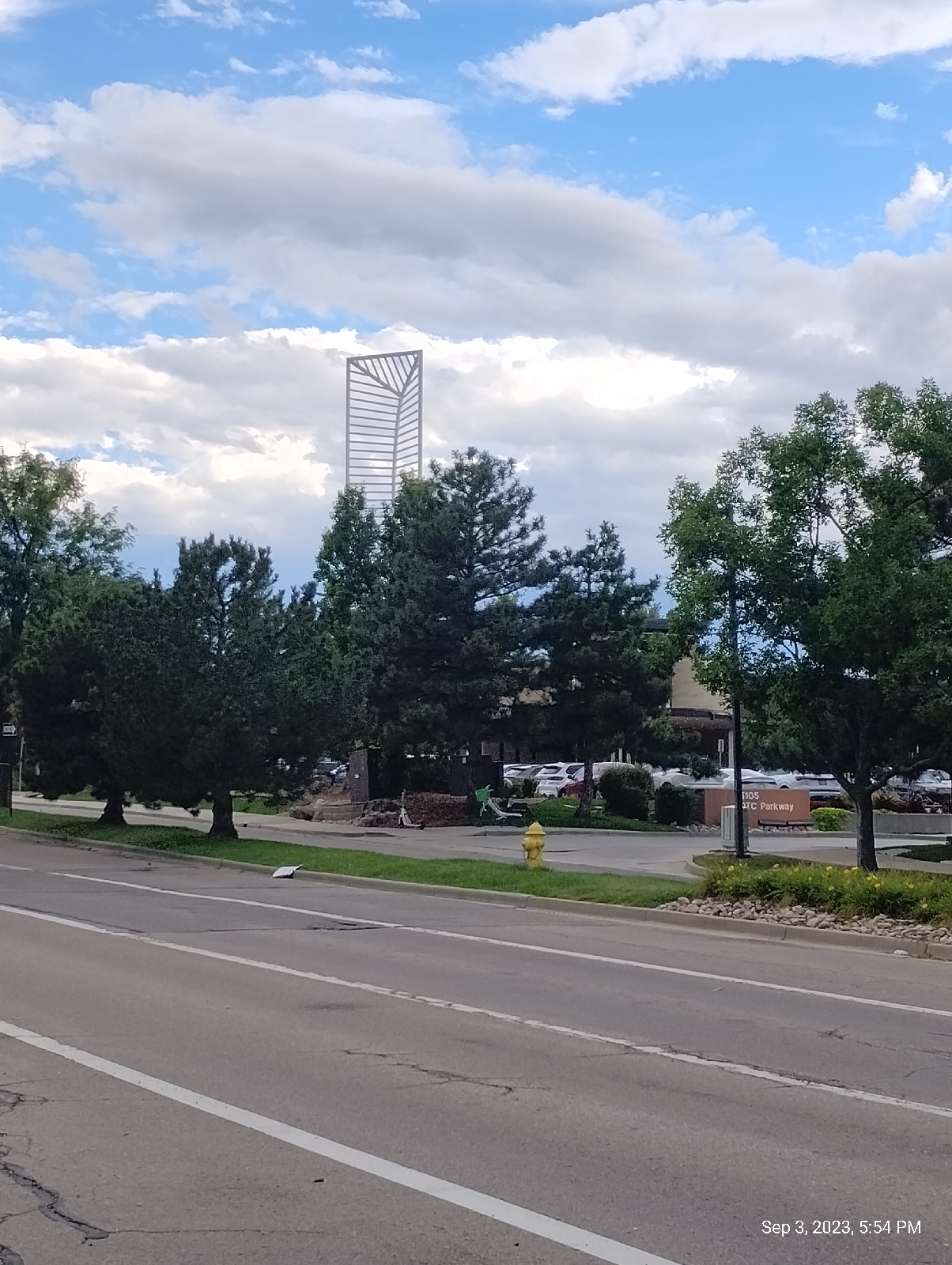
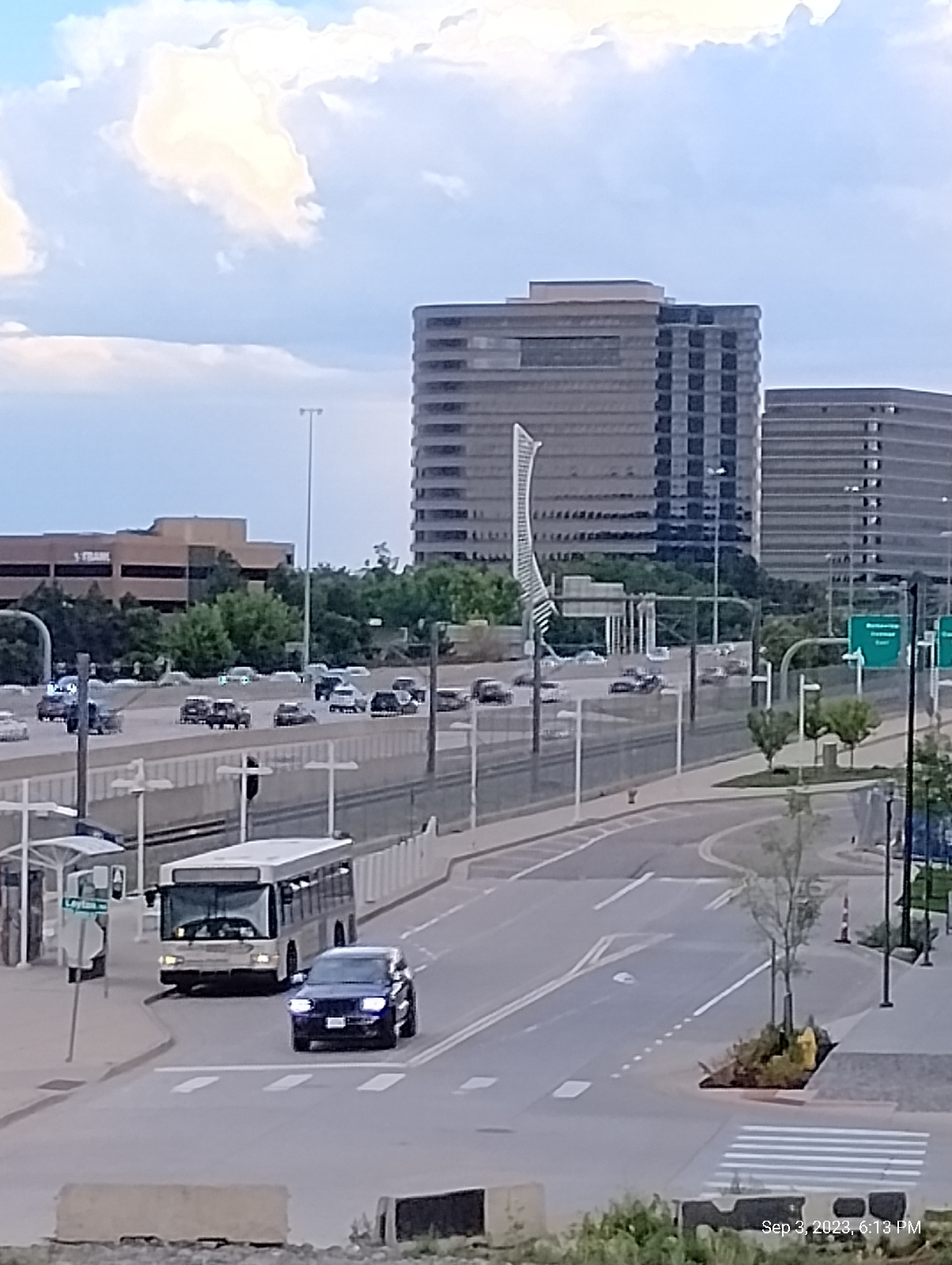
The above shot was taken on my outward journey, at the Arapahoe at Village Center Station. The premier plant on the plains, either wild or cultivated, is grass but the variety is so outstanding, it shouldn't be overlooked. These plants are almost certainly cultivated pampas grass planted in the margin of the station plaza right next to the tracks but the whole scene grabbed my attention so I took the photo for a lead-in to the blog. (East of the interstate, the valley highway blocks clear views of the mountains so don't expect any breathtaking vistas this time.)
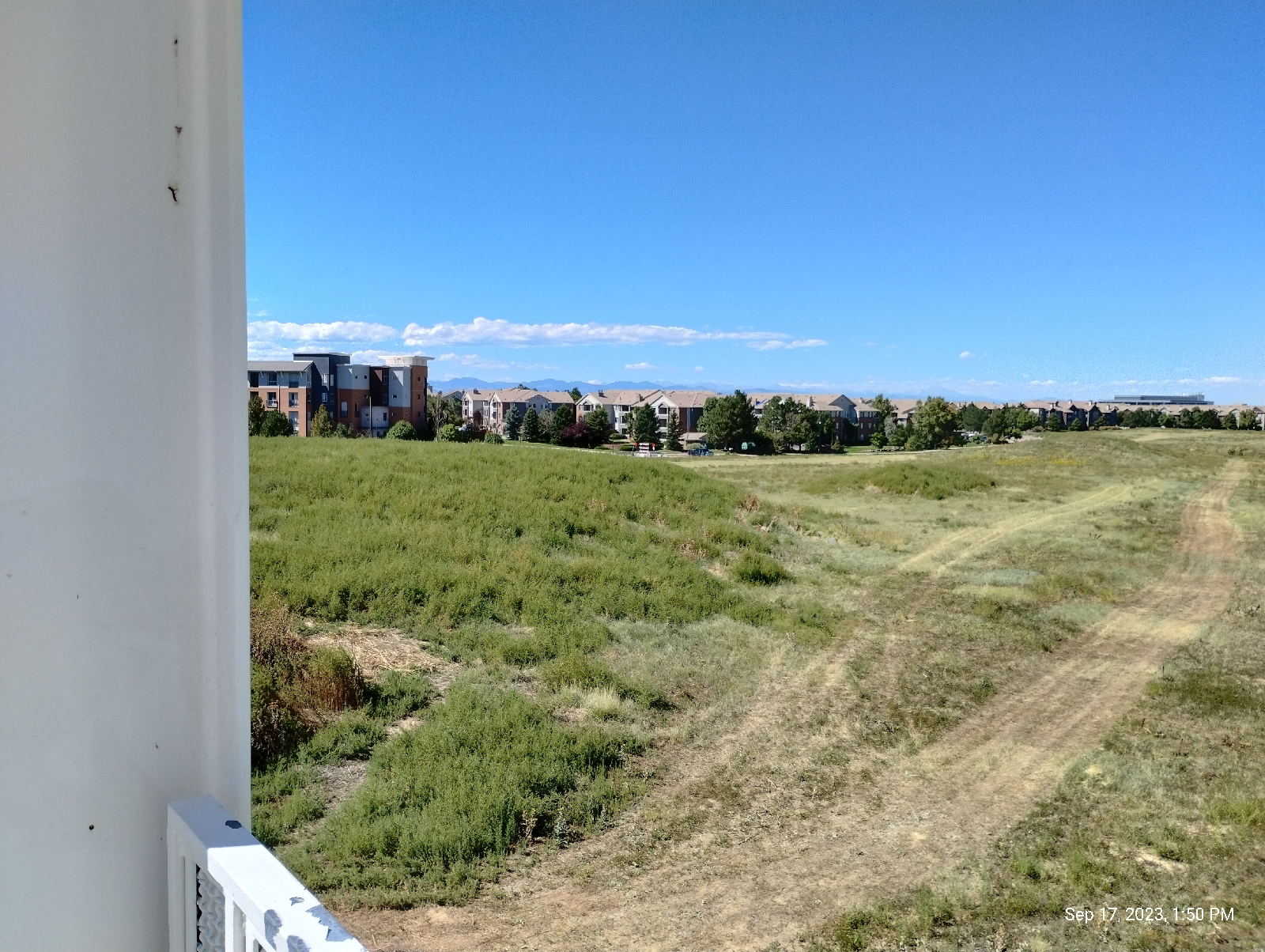

I don't know what causes the bumpy land on the north side of Union Avenue from Bellevue Station, whether the bumps are natural or manmade. The area is used as a park for the residential area nearby and one of the mini-mesas has a picnic table on top. I wonder if the mysterious mound at Arapahoe Station is just one of these hills that has been landscaped.
A mesa is generally a flat topped hill formed by weathering and erosion. The Table Mountains in Golden area are sedimentary rock topped by an erosion resistant cap of an ancient lava flow. Green Mountain, between there and Denver is just an erosion feature carved out of the layered sandstones and mudstones of the bedrocks underlying the Denver area. Mesas are a typical feature of desert areas, carved away by wind and water, less by streams than by the direct action of falling rain, dew, and water that seeps up out of the ground.
The Denver, Dawson, and Arapahoe formations are mainly sand and mud stones but there is certainly variation in density of the rock and, so, the ground can be expected to erode at variable rates. I can imagine these hills being the result of that process.

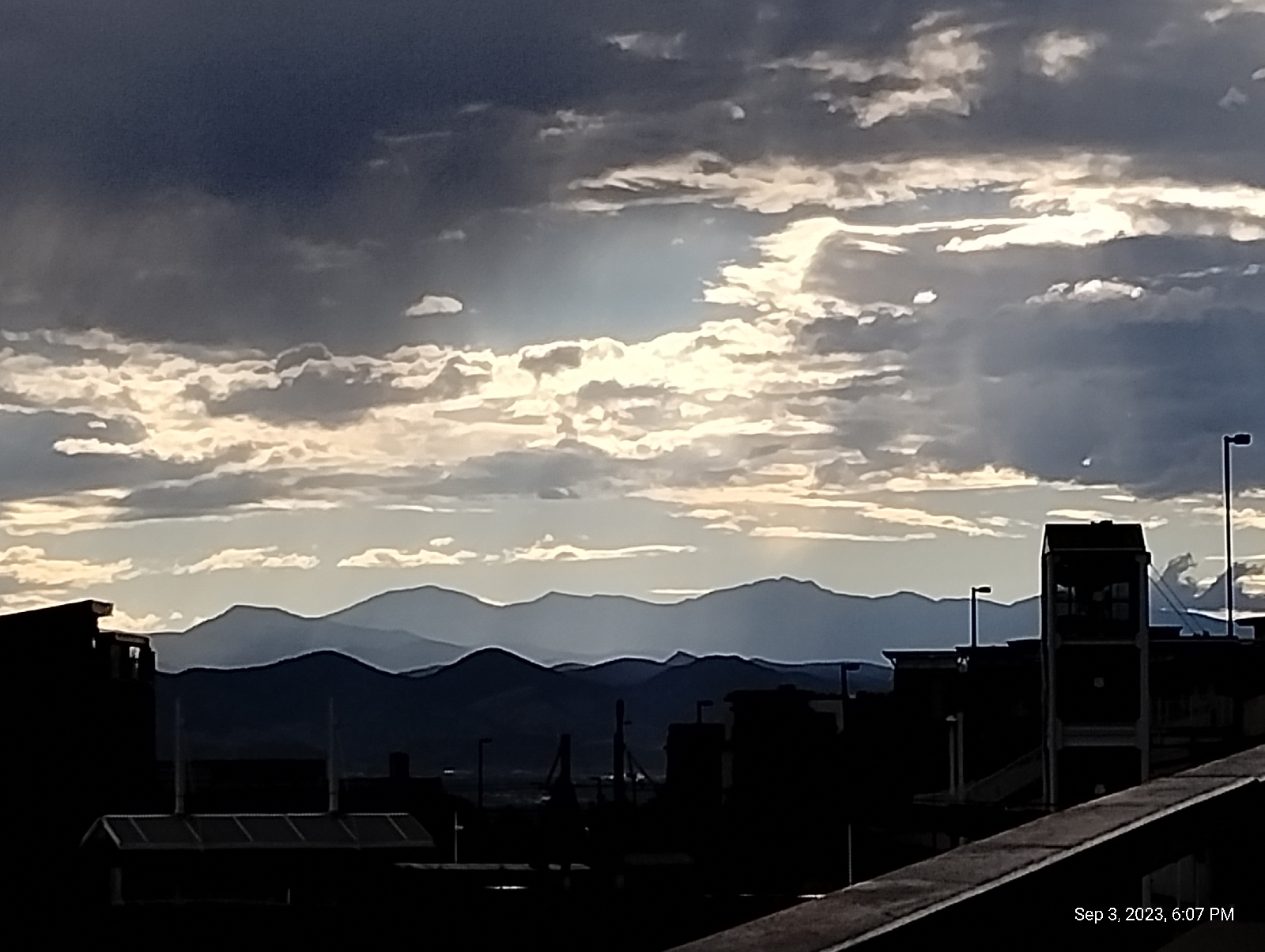
This view from the Union Street bridge next to Bellevue Station is the best I could do for a requisite shot of the Rockies on this hike. From here, I'm headed east.

I catch up to Goldsmith Gulch at George M. Wallace Park, which borders the DTC Parkway. Not to be confused with the Alabama governor, George M. Wallace is a developer considered to be one of the founders of the Denver Tech Center. The park is a big lawn with picnic tables and benches that provides an outdoor recreational area for the surrounding developments.


Goldsmith Gulch goes underground at Interstate 225, a Denver perimeter bypass, and the RTD H/R light rails. It reemerges on the other side near Rosamond Park.
These are very urban parks, manicured and all that, but they do have some small draws for the naturalist. I'm pleased to see my (and the Monarch butterfly's) favorite wildflower growing in abundance. I usually show the blossoms but, to the plant, the seeds are all important, so ..


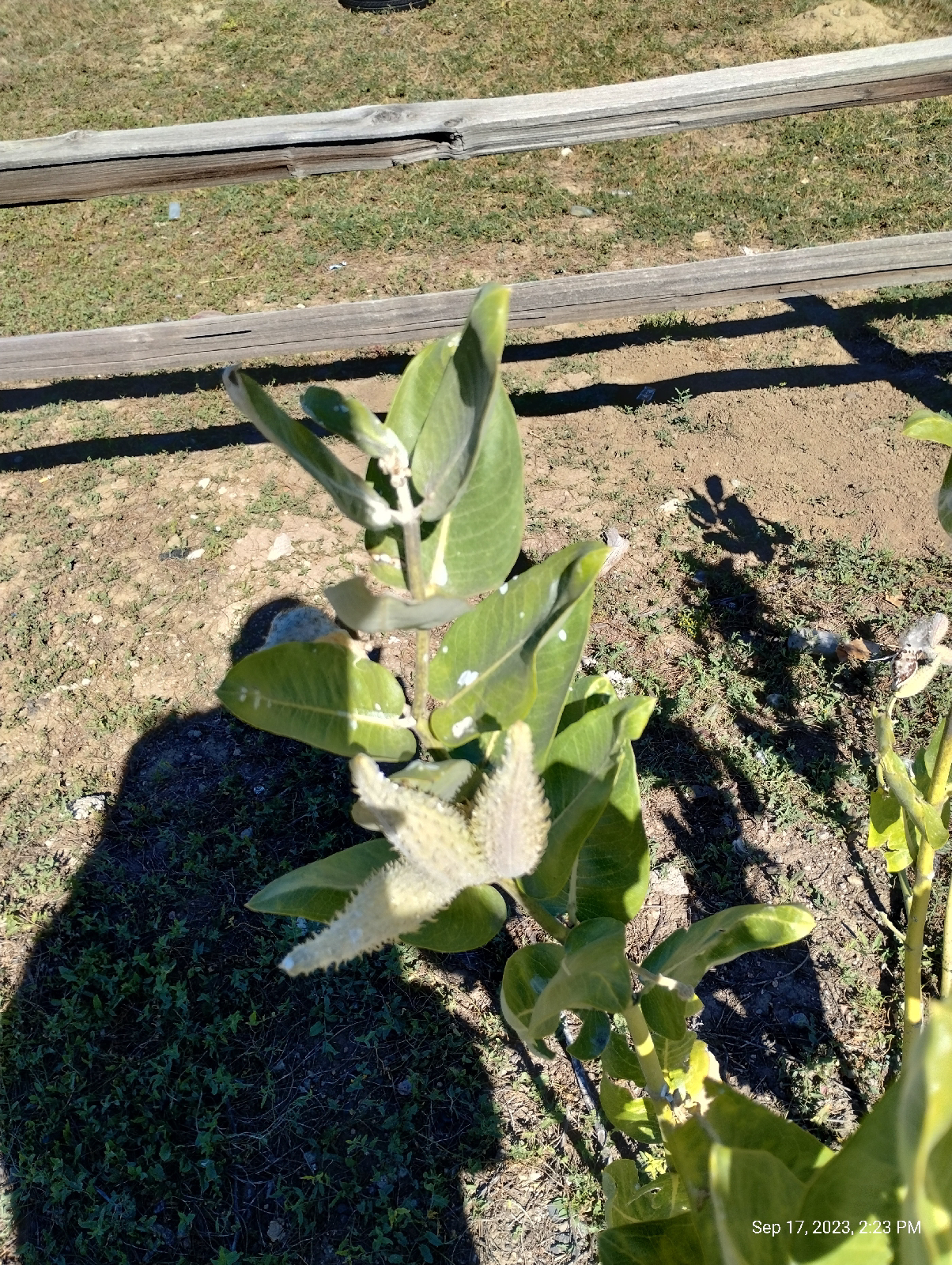
I'm sure one of the milkweed 's secret to success (I have never been to a place where it isn't) is the fact that so many seeds are spread by the wind.

These guys are there, too. You may have noticed from my past blogs that we like our prairie dogs.


By 2:00 I had to see just how badly I was overheating and was surprised to see that the air temperature was only 88° F. The humidity was sorta high for a desert town, 41%, but the real culprit was that blazing Colorado sun. If you aren't from Colorado and decide to visit, don't underestimate it. Heat, dryness, and altitude can be a deadly trifecta.

By Rosamond Park, the gulch has grown considerably.
The surface of the park is mostly loess and the colluvium that is so common in the area. "Loess", by the way is pronounced "less". It's a soft rock formed by sand, clay, and/or silt deposited by the wind. Geology students are reminded of that by the phrase, "more and more of loess and loess."
Most of the material around the stream was deposited by it...and the folks that constructed it, of course. Those rocks weren't born there.

This mudstone is a rare outcropping of something that actually belongs there...real bedrock! Muds often dry and compact into layers like this. The platey molecules, which are generally complex, tend to want to bind more strongly to those next to them to form sheets. The sheets are held together by weaker forces that become even weaker when dry. The polar attraction between water molecules go away. This stuff ends up being sedimentary mudstones and, if subjected to stronger forces and heat becomes shale, and then metamorphic slate.

This, believe it or not, is Goldsmith Gulch. It goes underground beneath that shopping center and then emerges across the street to continue it's journey to Cherry Creek. I left it here to follow Hampden Avenue west to my destination.
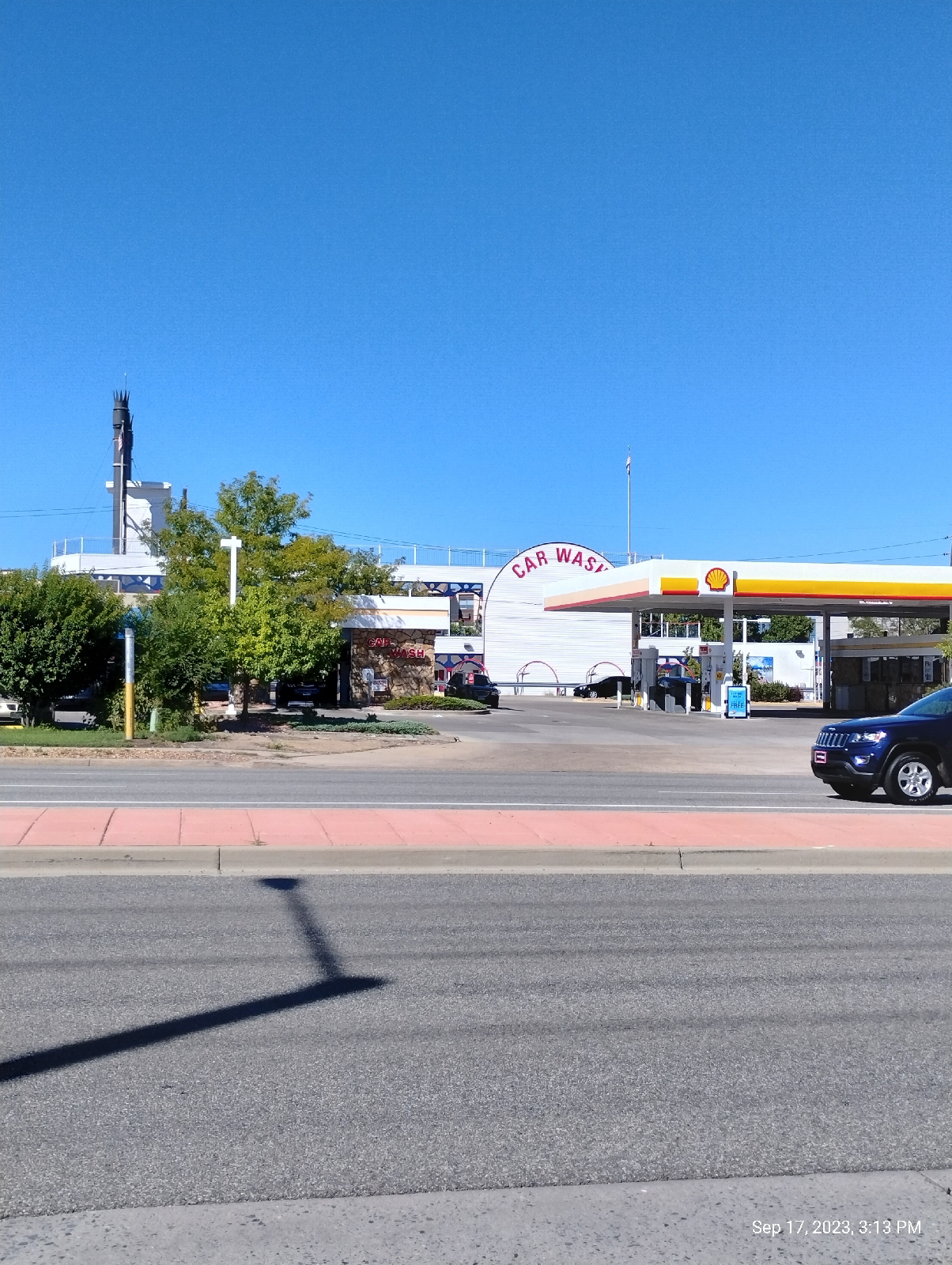
A car wash shaped like a river boat in the high desert. That's.....novel.


Like many of the light rail stations, Southmoor's parking lot is across the interstate from the train platform. The two are connected by a tunnel under the interstate. There used to be light columns along the walk that lit up and made an audible tone as you walked by. As Stephen King says, "the world has moved on."


There are residences behind these walls. From Southmoor to Broadway Station, there are noise barrier walls around long stretches of the light rail and Interstate. They're decorated with Colorado scenes. The bison is, of course, an iconic animal of the plains. It's not an official symbol of Colorado. The bighorn sheep is the official Colorado State mammal. But they're impressive, historic, and there are still a few around in ranches and national parks, and, uh, zoos. They're conserved and maintained.
Ones skullcap popped off. It shut down one of the rails for awhile until they repaired it. There are also mountains featured....and squiggly lines...not sure what they represent.
Anyway!

I had a supply run to make in Englewood. The light rail station there has nice vistas of the Front Range.

My hikes often turn into multipurpose treks. Once I loaded my backpack with supplies, I headed back home.
Next time, I'll take a final look at Goldsmith Gulch (for the time being), the Highline Canal, and Yale Station.