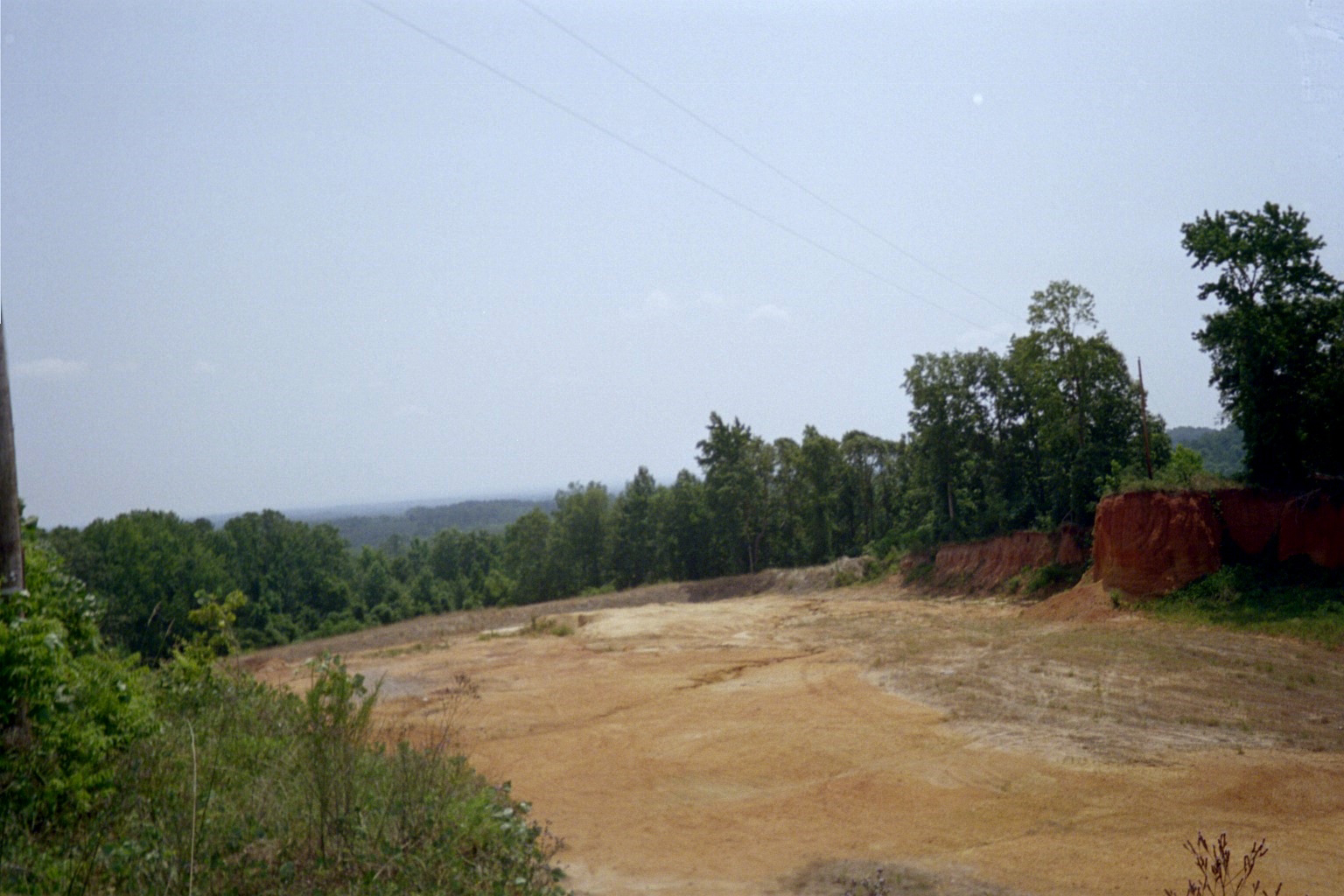
Roswell is situated in the northern region of the Chihuahuan desert. Roswell is on the Great Plains. Roswell is grasslands. Roswell isn't obviously karst but it's karst nevertheless Roswell is flat but not perfectly so. Roswell is dry but Roswell is an oasis.
Roswell is at 33° 23' 39" N 104° 31' 22" W. Selma, Alabama, where I used to live is at coordinates 32° 24' 59", about one degree latitude difference. So why is the environment so different. Selma is forested..... Roswell is desert. We'll get to that later.
The city is at 3,615 feet altitude. People are surprised by that after seeing how flat it is around here
The Pecos River flows 7 miles to the east of the city. The highlands that rise to Sierra Blanca begins about 40 miles to the west. The Rockies are about 70 miles to the west. In Denver, I had the requisite photo of the Rockies in my blogs. Here, it will be Sierra Blanco.
The city has an area of 29.776 square miles (according to the United States Census Bureau). Chaves County, of which Roswell is the largest city, has 6,075 square miles.
There are actually natural streams in Roswell. Some are dry now because the springs that fed them have been repurposed for industry and agriculture, but Spring River in South Roswell still flows (I think. I haven't made it that far yet.)
The land between Berrendo Road and Pine Lodge is primarily landscaped by Berrendo Creek and the Pecos River.
Pine Lodge from my house
It's flat around here. On my 1.7 mile walk into town, I get an elevation gain of 13 feet (according to measurements made by my AllTrails app.)
There is a blog discussing Berrendo Creek and I'll be posting a blog about Bitter Lakes Wildlife Refuge soon. That park is nestled beneath the Comanche Bluffs in the flood plains of the Pecos River Berrendo Creek meets the Pecos River a little south of this section.
I say that the land is flat here but there is a little topography
A draw on highway 285 North truck route north of my house.
Road cut on highway 285
The largest incline I'm aware of is the ravine that Berrendo Creek has cut through town, now dry, something between 20 and 30 feet deep.
Berrendo Creek
Like the Denver area, the Chihuahuan desert was once an inland sea and many layers of sand, lime, and gypsum have been laid down to make up the rock under my feet. The ground outside looks like ceramic but is actually soft.
Desert soil
It is limestone, or at least dust blown in from limestone. That's evident when it's mixed with vinegar.
If you want to know if a substance contains a carbonate, just add acid. Vinegar is a weak acid but it will make calcite (calcium carbonate) fizz quite nicely, giving off carbon dioxide and leaving calcium acetate behind in solution. Dolomite (magnesium carbonate) may need a little warming to effervesce.
The main bedrocks in the area are limestone and shale but there have been a lot of diverse layers laid down over a long time. My primary source is the strategraphic column provided by the Rockd geology app. (Childs, O.E. (1985) Correlation of strategraphic units of North America, COSUNA.AAPG Bulletin 69:173-180).
The top layer is very recent Ogallala formation deposited by area streams. It's mostly sandstone and gravel. Beneath that is a later of volcanic material from 63 to 19 million years ago. We're just east of the Rio Grande Rift where North America tried to pull itself apart. There has been a lot of recent (geologically speaking) vulcanism in the area. That big mountain on the horizon, Sierra Blanca, is an extinct stratovolcano.
About a thousand meters down is the Grayberg and San Andreas formation limestones overlaid by about 300 meters of impermeable sandstone and shale. The limestone layer is interlaced with cracks that allow storage of a lot of groundwater. The shale cap keeps the water under pressure so that when it finds a channel to the surface it forms the many artesian springs in the area. It also feeds the Roswell water wells.
The Ogallala formation is also an aquifer but, here, it's recharge rate is slow and it can be emptied quickly. Most of Roswell's water comes from the deep aquifer. According to the city website, there are 20 deep wells that draw water up, chlorinates it, and distributes it out to the city.
Roswell takes samples of treated wastewater daily, 60 samples a month, to test for bacterial contaminants and tests drinking water quarterly for chemical contaminants.
I bought a test kit (H2O OK Plus) to check our tap water. Most of the tests are on three test strips although the coliform test requires a tube of water plus reagent to sit a while.
The tests were easy and I was very happy with the results
The water is hard but 247 parts per million is far below EPA requirements.
Hard water is water with high mineral content, usually calcium and magnesium carbonates. It happens when water is stored in a limestone or gypsum aquifer. Roswell's aquifer is mostly limestone but there is still plenty of gypsum and even some interesting evaporates.....minerals that form when landlocked lakes evaporate. They're touchy for mineral collectors because they tend to draw humidity out of the air and then dissolve in it.
Hard water might have some health benefits (except for kidney stones for people predisposed to it) but it can play havoc with pipes and laundry. Calcium carbonate tends to precipitate out in cakes. Also, the calcium ions will combine with the sodium stearate (soap) to firm an insoluble, slimy, scummy precipitate of calcium stearate. The best way to tell if the water from your tap is too hard is that you can't get soap to lather. We get scum but the soap will lather. And unlike some folks, I like the mouth feel of coffee creamer in hard water
Roswell gets it's water from the deep aquifer but there are three major streams and a few intermittent tributaries that run through town. I explore Berrendo Creek in an earlier blog. Most of its length is usually dry but when it's wet, there's a flood.
I haven't seen the other two yet.....they are Spring River and Hondo Rio. All of these streams are tributaries of the Pacos River that flows 7 miles east of Main Street I'll talk about the others when I get to explore them.
The Pacos River at Bitter Lakes
Most of the natural water here is green. The green isn't pollution..... it's calcium. Here's another calcium loaded stream in Alabama
Brushy Lake, Northwestern Alabama
The climate here is hot and dry with occasional cold (night and winter) and rare rain, which is sometimes devastatingly torrential.
My family moved down from Denver late in October of last year (2025). The days were warm and cool. It was a good time to move into the desert. The nights, as is normal year round, was cool. By December, the days were cooling down. The vegetation which plagued me on my trips to town for supplies was dying down to stubble. We had some cold days and one snow between January and March. I think it has rained three times since we moved, never hard. Wet ground evaporates quickly. The sunsets are always gorgeous given the capacity for the dry air to hold dust suspended and the frequent hard winds that whip it up. The skies are vast and blue.
The following is from the Wikipedia article about Roswell.
We have a cool, semi arid climate and four distinct seasons. Winter is cool and there is occasional snow that doesn't hang around long. Spring oscillates between warm and cool but there can be cold snaps. There can be fierce winds. I clocked one gust last week at around 40 mph. I had to fight to walk against it. Summer is hot. Roswell experiences around 30 days out of the year above100° F. The North American monsoon season occurs during the summer and can bring torrential downpours and disastrous flash floods. The three streams that run through town can become raging rivers. The Berrendo ravine can fill up quickly. Autumn brings relief. Things cool off although there can still be hot days, and snow is possible from October to March
Since humidity is generally low and humidity causes changes to be more gradual, shade is considerably cooler than sun.
The record low: -24° F. (January 11, 1962, February 8, 1933)
The record high: 114°F. (June 27, 1994)
But the ground is that pretty cream color with glossy ground cover.....high albedo! This is a solar furnace. Hot anywhere else is HOT here.
So, the weather report for today (I'm taking a day off!):
Air Quality Index is fair at 45
No precipitation expected
Wind at 5.9 miles per hour from the west (prevailing winds here are mild breezes from the mountains (west) and brutal winds from the south in the leading edges of fronts and from the north after the front passes - beware the tumbleweeds. They're cute but vicious!
Ultraviolet index is high ( as usual, at altitude, there isn't a lot of filtering from the atmosphere)
Humidity is 17%
Barometric pressure is 30.17 inches of mercury. (About 1.02 bar, practically sea level.)
Why is Roswell so different from Selma?
The strip of land bordering the Rocky Mountains to the east used to be a vast, shallow inland sea. Over millions of years, plankton died, sank to the bottom, and left a thick layer (several thick layers, actually, interspersed with mud) of their calcium carbonate skeletons and shells. That turned into limestone....highly reflective limestone that baked and efficiently reflected heat back up into the air when the sea dried up
But more importantly, New Mexico is in the rain shadow of the Rocky Mountains. As humid air flows in from the Pacific Ocean, it rises up over the Cascades and the Sierra Nevada mountains and the Rockies into cooler heights where most of the humidity precipitates out. This is the air that Montana, Wyoming, Colorado, New Mexico, and Mexico gets. The eastern United States gets humidity pumped in constantly from the Atlantic and the Gulf of Mexico. It's dry and there's nothing to buffer the heat
So my journey to adapt to desert life continues. This Arctic wolf is going to have fun. It's not like I can lock myself in an air conditioned house and never come out. My heart condition requires real activity.
Well, adventure might be painful, but it's fun. No pain.....no gain!
:)
So.....land, air, and water. It's where you live. How is your world? What kind of rock is under your feet? Is there plentiful water or is it dry? Are there caves near you? That's a part of karst geology. Do you have seasons or is it summer one day and.....suddenly winter! Have you tested the water from your tap? Water testing kits are easy to come by, usually from local hardware or home supply stores.